For a movie that spends much of its run-time in the waters of melancholy, âThe Edge of Seventeenâsâ greatest achievement is it manages a sweet ending that feels believable and sublime. This is a film that takes a comedic yet hard look at the trials of adolescence. It hits high notes of what itâs like to wade through high school as an awkward teenager: of trying to make friends, to fit in, and finding meaning and purpose amidst rampaging hormones and constant change. But it also undertakes the more dramatic, confronting personal loss and family strife – all while making us laugh in the process.Â
This is a coming of age movie, and Kelly Fremon Craig, in her directorial debut, wonderfully creates a picture that builds on the spirit of the John Hughes era movies that inspired it. Teen problems are given real weight, not portrayed as one-offs or opportunities for viewers to bask in their awkwardness. High school may seem like a million years away to some, but when youâre going through it itâs the biggest thing in the world. A bond with a friend, and perhaps an understanding parent, can be the glue that holds us together.Â
Weâre introduced to this world by 17-year-old Nadine, played to perfection by Hailee Steinfeld (2010’s âTrue Gritâ). Growing up alongside her older and more popular brother Darian (Blake Jenner), she feels lost and insignificant. We see highlights of her life: She meets an awkward girl named Krista (Haley Lu Richardson) who becomes her best friend. She and her mother (Kyra Sedgwick playing a well-intentioned but emotionally unavailable parental figure), come to heads throughout. Her one familial ally is her father (Eric Keenleyside), who understands his daughter on an intuitive, unspoken level. âI know kids can be mean,” he tells his seven-year-old. âBut if you get a chanceâ¦fart in their backpacks.â
However, Nadineâs life changes for the worse when her father tragically dies. The ensuing scene is a marriage of scriptwriting and acting: Darian consoles his mother while Nadine looks on in solitude. This is her nightmare; sheâs lost her only ally but has to suffer silently. The momentâs not about her. Her emptiness intensifies as she and Krista part ways once Krista begins dating her brother, which to Nadine feels like a betrayal. But unlike lazier films, this development isnât used for entertainment. Nadine embarks on a journey of self exploration, pain, and ultimate growth which is drawn with authenticity and emotion.Â

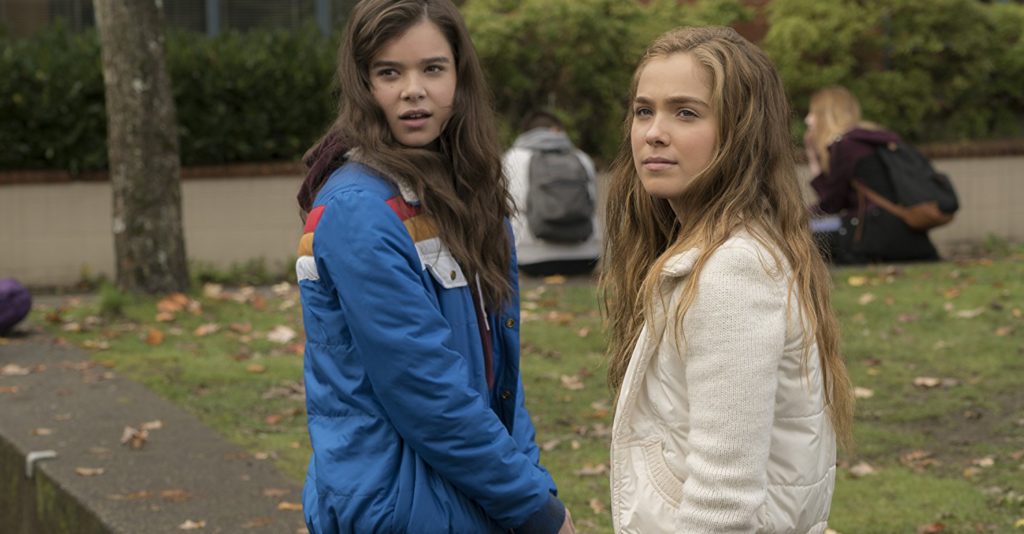
Steinfeld is the undisputed star of this movie. Sheâs honest, emotional, and real. She builds Nadine from the ground up. In the filmâs opening sheâs melodramatic, threatening suicide to her history professor (Woody Harrelson in a wonderful performance). And while the scene is offered as humor (Nadine does not really want to kill herself), it works to highlight her pain. Itâs a honest pain, and one that transcends mere adolescence. She often reacts sharply, out of anger, bitterness, and hopeless frustration. But Steinfeld layers Nadine cautiously, honestly. Her pain is real. We understand where sheâs coming from and we feel it too.Â
Sedgwick and Jenner struggle some in a script that doesnât give them enough attention early on. Sedgwick, who I adored in John Turtletaubâs âPhenomenonâ here plays a grieving widow who, unable to deal with Nadine while her husband was alive, struggles even more as a single mother. A scene between the two in a car when Nadine needs her support is oddly flipped. We feel Nadineâs loneliness as her mom elaborates on ways to make herself feel better, her daughterâs concerns pushed aside.
Jenner performs likewise. For the first act he’s mostly one note, as he oscillates between snarky interactions with Nadine and the responsible sibling role heâs forced into. But he and Steinfeld have good chemistry, and their final two scenes, filled with tenderness and emotion, rewards viewers and more than makes up for his development during the film’s previous acts. Sedgwick has her moment too – a text message conversation with her daughter near the movie’s close that is painful, sweet, and real.
The rest of the cast buffers the film well. Harrelson shines in his role as Mr. Bruner, taking a mostly comedic role and injecting it with heart and passion. Itâs one of his most pleasing roles to date. Richardson is sweet, showing the kind of true friend who patiently waits for Nadine even when she casts her aside. The film throws in two others: an awkward classmate named Erwin who takes a liking to Nadine (Hayden Szeto) and another, Nick (Alexander Calvert), Nadineâs mysterious dream guy whom she desperately wants to hook up with. Her relationship with both is handled well; Nadine grows and heals through her interactions with them. By the filmâs conclusion, watching Nadine’s intoxicating smile escape from her downturned head, youâll be smiling right along with her.
âThe Edge of Seventeenâ may not gain the heights of pop culture infamy as âThe Breakfast Clubâ or like dramas, but itâs a warm addition for the modern age. With clever dialogue, emotion, and likable characters, Kelly Fremon Craig shows her passion to produce a thoughtful project that transcends its intended audience. The film watches well and encourages understanding. Thatâs something we could all use a little more of these days.Â