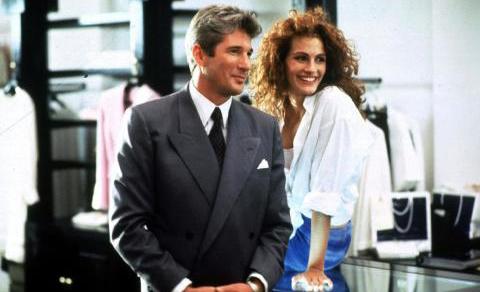
At the beginning of “Pretty Womanâ we have a business tycoon who canât drive a sports car and a hooker that canât get a date. Julia Roberts plays the hooker, and Richard Gere plays the tycoon, and the result couldnât be sweeter. Garry Marshall, who directed a plethora of romantic comedies, such as âRunaway Brideâ and âThe Other Sister,â shows his talent here by allowing a conservative script to give way to excellent performances, the result a toned-down and heartwarming tale. âRunaway Brideâ would re-unite Gere and Roberts, which fans were no doubt clamoring for. The movie is sweet, in an almost quaint way, and not at all what youâd expect given its description.
When we first meet this filmâs characters, we are expecting cliché. Gere plays Edward Lewis, a business professional that swallows companies and breaks them up into little pieces. But he canât find his way to Beverly Hills, stalling a car loaned to him by his lawyer, a very un-comic Jason Alexander. And Vivian, played by an irresistible Julia Roberts, offers to guide him to his hotel for a measly $20. The movie shines by showing how little this is to him, and how much it is to her. For reasons part plot progression, but more loneliness, he invites her up to his hotel room.


What succeeds about this film are the characterâs innocence, and how they work off each other in unexpected ways. Observe the confusion as Vivian pieces together that Lewis isnât expecting to have sex. $100 dollars for an hour, she says, which Lewis pays without a thought. And observe as Lewis asks her to spend the night, and then as his date for the week, for the price of $3,000. âI would have paid 4,â Lewis states, to which Vivian replies, âI would have accepted 2.â This film was produced years before Gereâs intriguing “Arbitrageâ but some may find interest in parallels between this conversation and one it that film. In the latter, the parties are bartering for a company; here they are bartering for something more.
âPretty Womanâ works because of these characters. It doesn’t work because he’s a businessman and she’s a prostitute, or because it’s cute. It works because while both have been on questionable paths, here they find acceptance. Watch as a business rival (Ralph Bellamy) legitimizes Vivian’s confusion with picking the right dinner fork seconds before eating with his hands. Watch also as Edward, who eats billion dollar companies for breakfast, stalls a sports car and she doesn’t make fun. But the movie works hard to make this theme of acceptance resonate. A car full of adolescents at the filmâs beginning catcall to Vivian as she stands on a corner. But it isnât until one of Edwardâs colleagues finds out her profession, that we, as Vivian, understand the degradation that goes along with it.
The acting is good all around. Itâs clear Marshall bet the farm on his leads, and they do nothing to disappoint. Gere is likeable as a millionaire everyman, and presents a standup guy even if he doesnât always do the right thing. And try not to fall in love with Julia Roberts, who infuses Vivian with such innocence, such a vibrant life that you donât even mind the filmâs predictability. The filmâs other players, including Jason Alexander, Ralph Bellamy, and Laura San Giacamo all add to the film just as needed. San Giacamo in particular shines with the limited screen-time allowed as Vivianâs friend Kit, highlighting an unshakeable bond between the two. Not to forget Hector Elizando, who Iâve always admired, and who does nothing to hurt his reputation here as hotel manager Barney Thompson.


At the end of the day, âPretty Womanâ is just a nice movie. Its characters are sincere, and we buy into their love, even if we donât believe it can last. We want it to, and thatâs why the movie works. I could criticize the movieâs ending, which is both contrived and predictable, but why bother? This is just a sweet and touching film that we donât see much of anymore.
– by Mark Ziobro