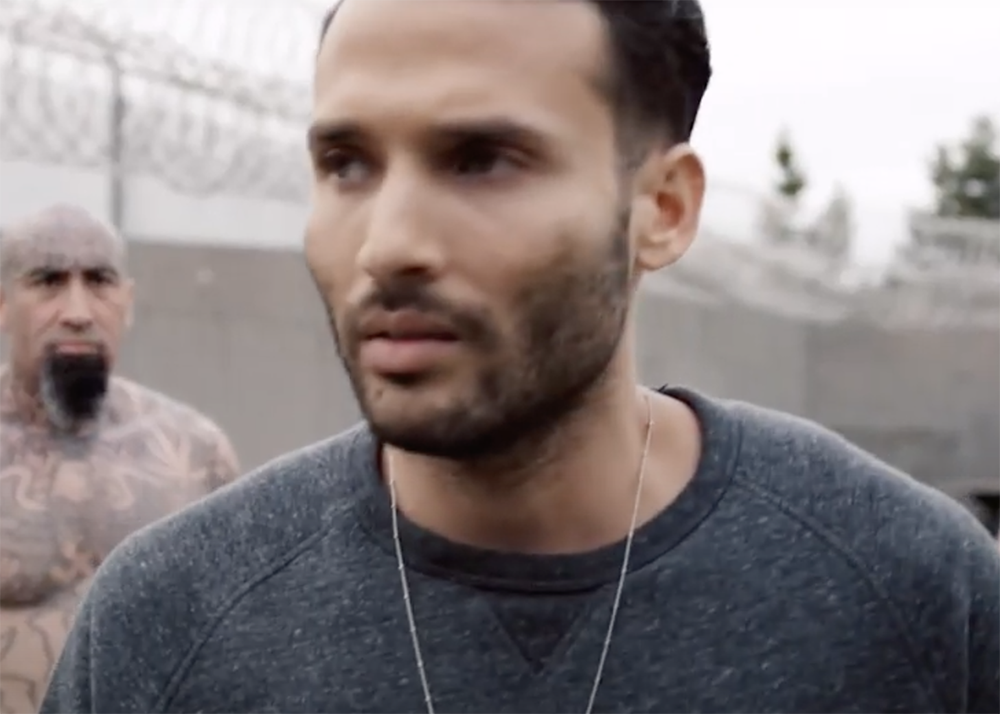
“How you get sent up here is beside the point. It’s what it does to you and what you make of it. I just lived it like I did everything else in my life.”
As Bryan Bruton (Theo Rossi) says this through voiceover, that last sentence tells us almost everything we need to know about the man. Prison is supposed to be an interruption, a punishment, perhaps even an occasion for reflection. But for Bryan, it was another environment to learn. New rules, new people, new opportunities. Same guy.
And that framing is also what makes Vincent Grashaw‘s Locarno-premiering “Bruton” fun for as long as it is. Prison and escape movies have an almost unfair advantage when it comes to accessibility: lock somebody behind walls, give him limited resources, and we’re naturally curious about how he’ll manipulate his surroundings. Yet when that somebody is a real-life hustler rather than an innocent man wrongly imprisoned, ingenuity can only carry the story so far. We also have to enjoy following him. Fortunately, Theo Rossi makes that part easy.
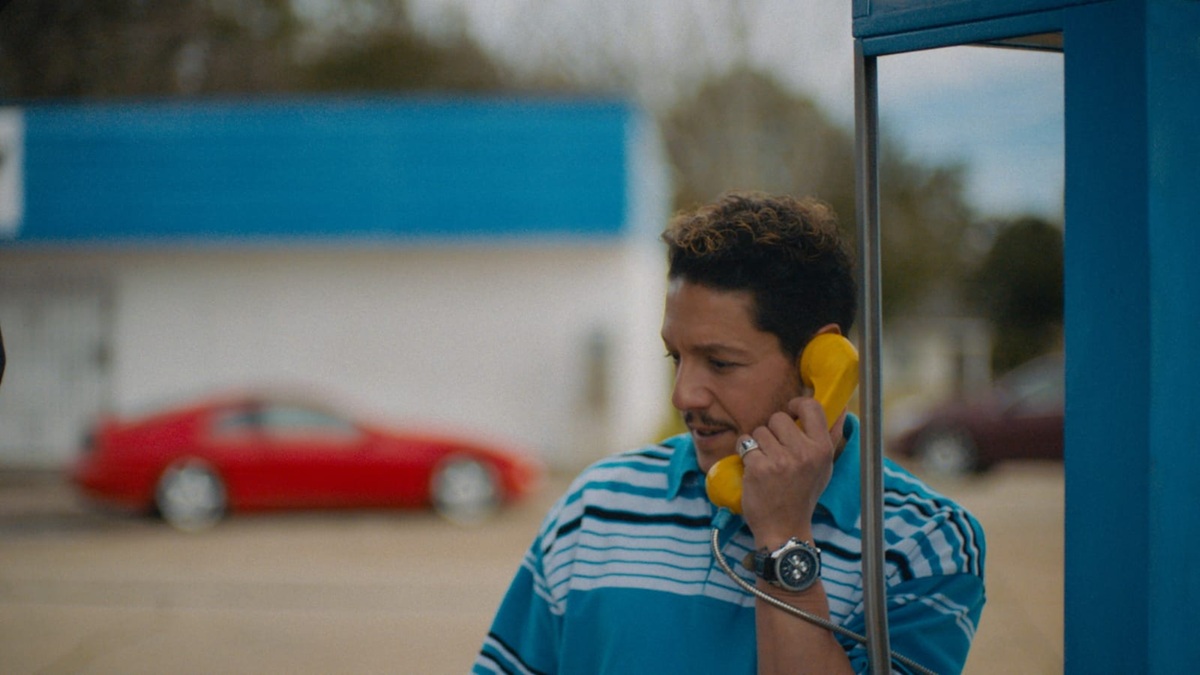
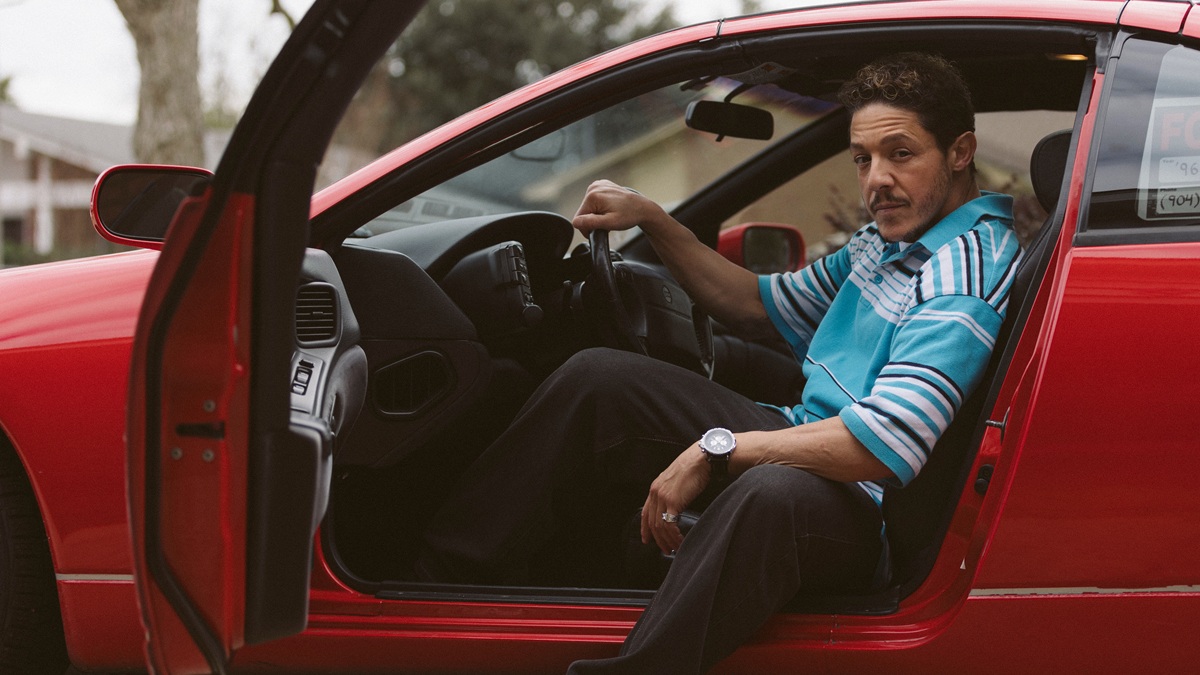
Set in mid-2000s Jacksonville, the film introduces Bryan Bruton as a small-time drug dealer who has developed his own practical science for staying ahead of the police. He swaps cars, knows where to hide contraband during traffic stops (who knows a pack of potato chips can come in handy as drug storage?), and seems to possess the dangerous confidence of somebody who’s gotten away with enough that getting away with the next thing feels inevitable. He’s also trying, in his fashion, to straighten himself out. There’s a legitimate business, a wife in Sienna (Aya Cash), and above all his daughter Crystal, whom he plainly adores.
Then one reckless series of choices ends in a man’s death and Bryan receiving a ten-year sentence for manslaughter.
The System Changes. The Hustler Doesn’t.
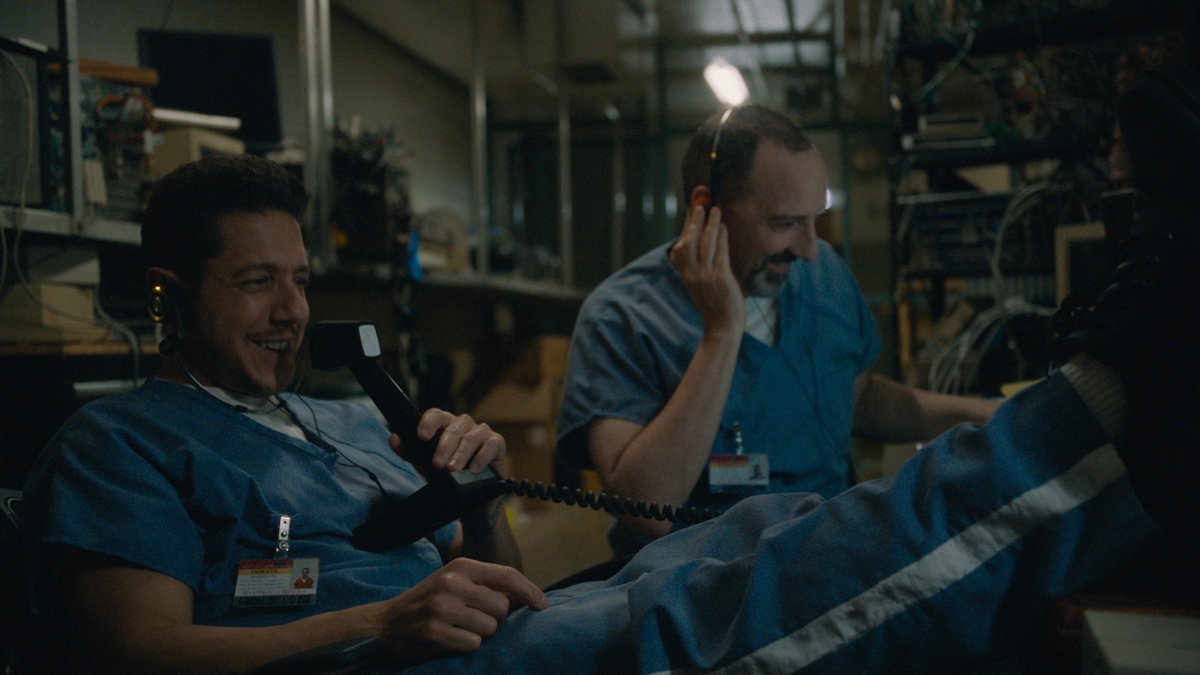
What happens inside is much more enjoyable than that setup might suggest. Bryan finds Jamal (Kelvin Hodge), Duncan (Aaron Quick Nelson), and Kai (Tony Hale), studies how goods and favors move around the facility, and starts building businesses where conventional commerce supposedly no longer exists. Every restriction creates demand. Every demand gives Bryan something to sell.
Grashaw doesn’t treat prison as two uninterrupted hours of violence and degradation, and I don’t share the objection that making this material funny somehow trivializes incarceration. Comedy can expose the absurdity of an institution as readily as misery can expose its brutality. Grashaw has said he deliberately wanted to capture the everyday ingenuity and even ridiculousness he found in stories about prison life, rather than reproduce the same relentlessly grim prison movie he’d seen before. And that same looseness gives “Bruton” its personality.
There’s a rough, independent-film texture to the Jacksonville scenes and the prisons themselves, which keeps the movie connected to a particular way of life rather than polishing Bryan’s story into slick true-crime mythology. Grashaw also shot in three functioning prisons, and that physical reality helps the institutional spaces feel occupied rather than constructed simply to imprison the camera.
As Bruton, Rossi thrives in that environment. He gives the protagonist enough swagger to make each scheme pleasurable without sanding away his selfishness. His character seems less addicted to money than to the satisfaction of figuring something out before everybody else does. There’s always another loophole, another person susceptible to charm, another rule worth testing. That makes the film’s capitalism idea tantalizing. Incarceration doesn’t eliminate markets; it rearranges them. The government can take away Bryan’s freedom, but scarcity, exchange, labor, debt, and profit follow him behind the fence. He’s disturbingly well suited to this world because the basic logic isn’t foreign to him at all.
The movie notices this. I only wish it were more curious about what it means.
When the Breeziness Gives Way to the Message
Grashaw keeps the camera firmly on Bryan rather than expanding outward into a larger examination of incarceration, and that’s a perfectly legitimate choice. After all, “Bruton” is a character study before it’s a political argument. Still, the film repeatedly brushes against questions it doesn’t have much appetite to pursue: whether prisons rehabilitate or merely punish, how confinement produces its own economy, why the consequences of Bryan’s original crime keep multiplying, and how easily institutions can turn punishment into another system of transactions.
Vincent Grashaw turns a true-life prison hustle into an easygoing character study, with Theo Rossi holding things together when the tone starts to wobble.
Part of me sees the film’s focus on Bryan as humanizing, while the other part finds it too credulous toward him or too eager to convert systemic critique into personal redemption. Ultimately, I feel conflicted: I don’t need “Bruton” to condemn its subject, nor do I mind enjoying his company. I just wanted the film to follow some of its own implications a little farther. Instead, the final third starts loading Bryan’s story with emotional significance. His daughter becomes increasingly central, social criticism grows louder, and the easy momentum of the prison hustle gives way to sentimentality. Grashaw needs consequences to catch up with Bryan eventually, but the tonal change feels less like the natural darkening of the same movie than a switch into a more conventional B-movie melodrama.
That focus also fits Grashaw’s recurring interest in bruised men negotiating systems of punishment and second chances, from the abusive reform institution of “Coldwater” to the aging fighter seeking a different way forward in “Bang Bang.” “Bruton” is the breeziest variation on that idea, though perhaps also the least curious about the system itself.Â
‘Bruton’: An Uneven Material Carried by Its Lead Actorâs Charm
For the most part, Rossi keeps it watchable. He’s especially useful when Bryan’s bravado starts failing him because he doesn’t suddenly transform the man into a saint. But the screenplay seems increasingly determined to steer us toward a redemption that the messier earlier sections didn’t require.
Then Grashaw does something simpler: The dramatization ends, and “Bruton” turns to photographs, title cards, and footage of the actual Bryan Bruton. We’re told that he spent 11 years and 29 days within the Florida Department of Corrections.
The number is so precise that it cuts through some of the sentiment surrounding it. Ten years becomes eleven years and twenty-nine days. A sentence becomes a portion of an actual life. Suddenly Bryan’s opening monologue sounds different, too. âIt’s what it does to you and what you make of it.â
“Bruton” could have looked harder at what the institution did to its central character and what that institution does more broadly. Grashaw is more interested in what Bryan made of it, and for roughly two-thirds of the movie, that’s enough: strange, funny, energetic material carried by a lead actor who knows exactly how much charm a hustler needs to keep us in his corner. The movie gets heavier as it goes, but Rossi keeps serving the same function Bryan does inside prison. He just keeps finding a way through.
“Bruton” had its world premiere at the 79th Locarno Film Festival, where it was selected to be screened out of competition. Follow us for more coverage.