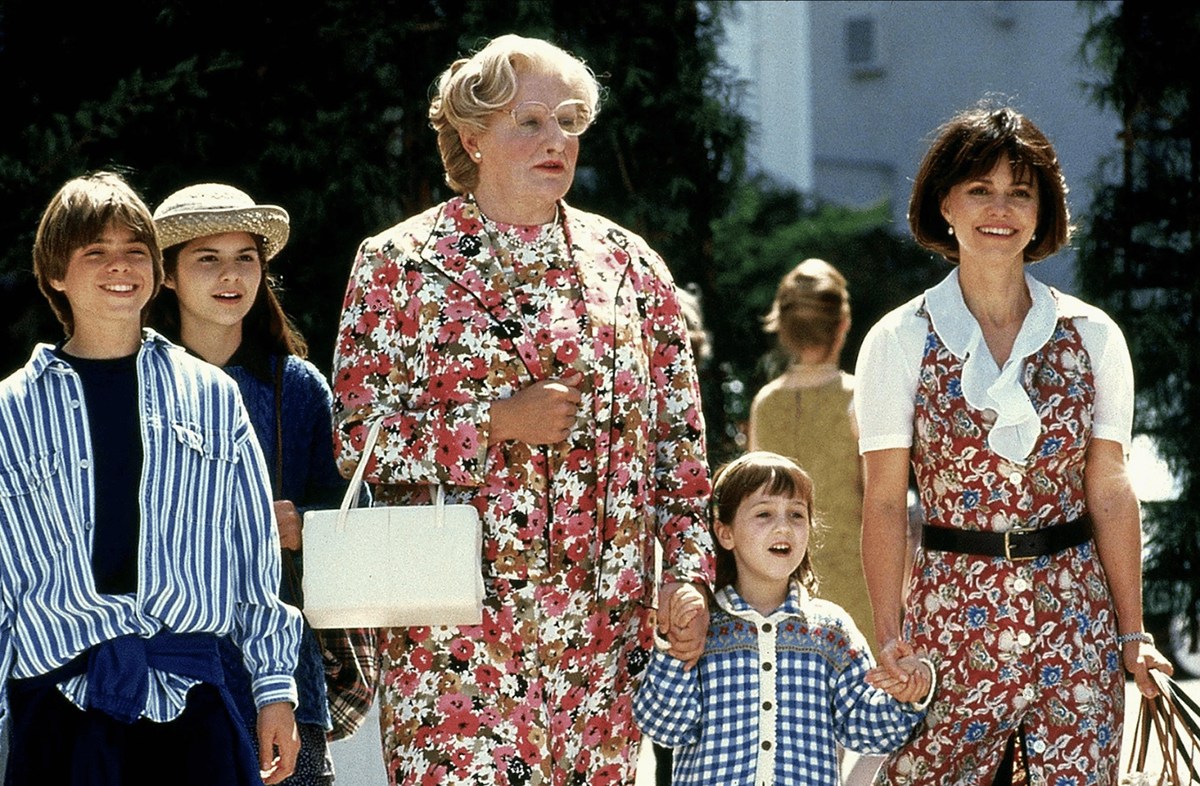
Watching this film again over the weekendâand despite its leadâs zany, comic excessivenessâI was struck with how astute a divorce drama âMrs. Doubtfireâ is on top of its humor. Itâs not surprising the comedy is mixed with emotion (itâs directed by Chris Columbus, who did âBeethovenâ and âHome Aloneâ). Yet what is surprising is despite being raunchy, âMrs. Doubtfireâ is also poignant. It bookends its proceedings with divorce drama that feels painful rather than comedic. Itâs a film, like âKindergarten Cop,â that you saw as a kid, watch again as an adult, and realize the film might not really be for kids. Yet considering âMrs. Doutbfireâs strengthsâand its flagrant ending homage to Mr. Rogers Neighborhoodâits ultimate takeaway is a film full of empathy instead of vitriol, full of ’90s nostalgia.
The film’s plot is so zany it defies reasonâbut then again, this was the decade that released Stalloneâs âStop or My Mom Will Shoot.â Here, Robin Williams plays Daniel Hillard, an actor who quits his job for moral concerns, throws a party he shouldnât for his son, and finds his wife, Miranda (Sally Field) has had enough. The way Columbus starts the scene: a mobile petting zoo brought to Hillardâs San Francisco home, animals destroying his house, and kids dancing on tables to House of Painâs âJump Around,â you’d think he’s setting up a hijinks-driven film. Yet the ensuing argument between Daniel and Mirandaâwhich leads to their separationâis real. Thereâs a a seriousness to the film’s tone when she says she wants a divorce. The stillness continues as the camera pans to their three children (Matthew Lawrence, Lisa Jakub, and Mara Wilson) watching from the stairs above.
Under the Comedy: The Seriousness of Divorce
It’s also this realness that saves âMrs. Doubtfireâ as it swan-dives into the land of the absurd. In an effort to be with his children daily after the divorce judge only grants him Saturday supervision, Hillard entrusts his gay brother (Harvey Fierstein) and his partner to âmake me a woman.â The result is humorous scene on top of humorous scene as they transform Hillard into a semi-believable old woman he then passes off as a nanny for hire.
Much of the film that follows involves using âMrs. Doubtfireâ for laughs at Danielsâ expense, Williams ad libbing his unique brand of comedy, and a bevy of jokes most movies wouldnât dare today. You could imagine âMrs. Doubtfireâ turning unforgiving in the hands of a lesser actor. But Williams adds a charm to the role that would have failed with literally anyone else. Critic Roger Ebert was correct when he said Williams âwould have had to be carried away kicking and screaming from the project.â
However, “Mrs. Doubtfire” works as it does due to two factors: a) Williams is devoted to the performance â not of playing Mrs. Doubtfire but of being Hillard trapped within the ruse and b) his kids really love him. All three beg him not to leave in the filmâs open sequences as he packs his station wagon, and later repeatedly ask their mom why dad canât watch them after school instead of Mrs. Doubtfire. In fairness, this part of the script I questioned, as, despite not having current employment or an apartment at the time of the judgeâs decision, an only Saturday visitation schedule seems a bit harsh for the custody arrangement. But it must be to set up the filmâs premise. As Mrs. Doubtfire, Daniel becomes supermom. He cooks, cleans, learns recipes, and is strict and formal.
Comedy, Albeit a Bit Dated
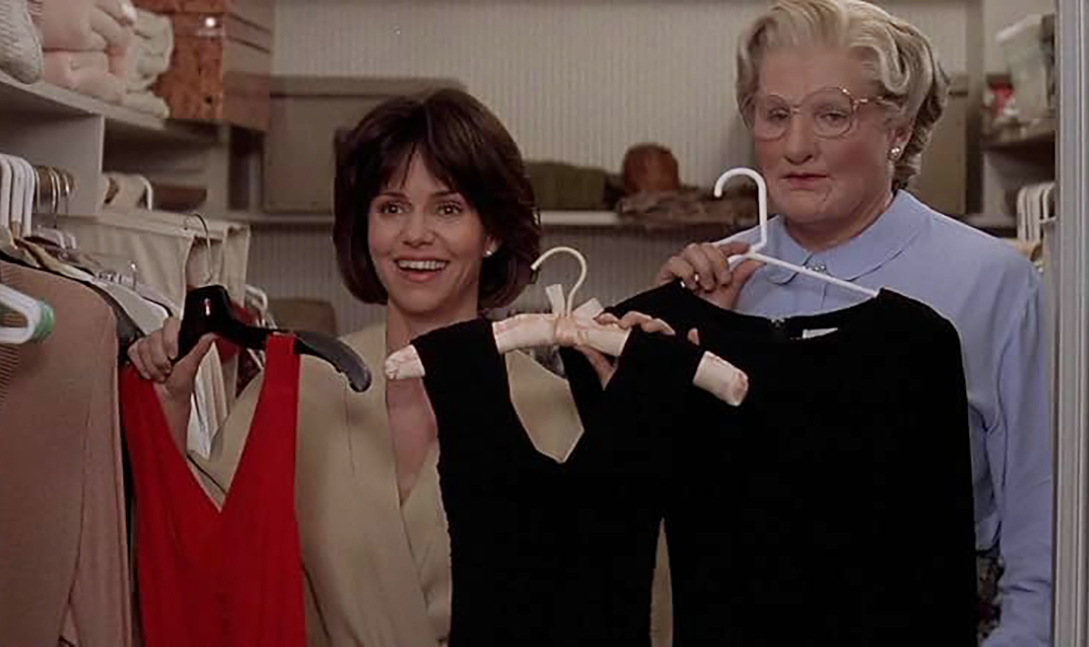
I had the thought watching the film that had Hillard been like this, maybe his marriage wouldn’t have ended. Yet âMrs. Doubtfireâ is smart by not showing us the complete build-up to the coupleâs divorce and by not making it one-sided. Miranda resents him for being too loosey-goosey and devoid of responsibility; he resents her for her busy, corporate job (sheâs an architect) and lack or availability. Both probably stopped being right for each other a long time ago.
But the filmâs treatment of divorceâbetween its calamityâis dour. Weâre privy to a multitude of scenes where Danielâas Mrs. Doubtfireâmust learn what his wife thought of him as she confides in Mrs. Doubtfire about her marital strife. Here, Field has less to work with, but the film draws her out more than many modern comedies. Sheâs serious but still cares. Sheâs a good mom. But this is Williamsâ film, and the script by Randi Mayem Singer and Leslie Dixon (based off the novel by Anne Fine) treats her character a little colder than it could have.
Aside the comedy Mrs. Doubtfire herself brings, much of the rest of the film devotes itself to Hillardâvia his alter egoâwatching his wifeâs new love interest, Stu (a subdued Pierce Brosnan) replace him. Brosnan had not yet become Bond here and is limited. He still makes the most of his scenes, especially as Hillard constantly tries to push him away from the family throughout. This comes to a head as Hillard must be Mrs. Doubtfire at his wifeâs birthday (with Stu and the children) and simultaneously be Daniel Hillard to meet with the owner of the TV station he works (Robert Prosky) to interview for a job promotion. The situation ends like youâd expect, with hijinks, pratfalls, laugh-out-loud comedy, and finally, serious repercussionâall within 20 minutes. âMrs. Doubtfireâ then jettisons into its final act, which, again, is somber and more serious than its previous scenes would suggest.Â
A Smarter Divorce Study than Given Credit For
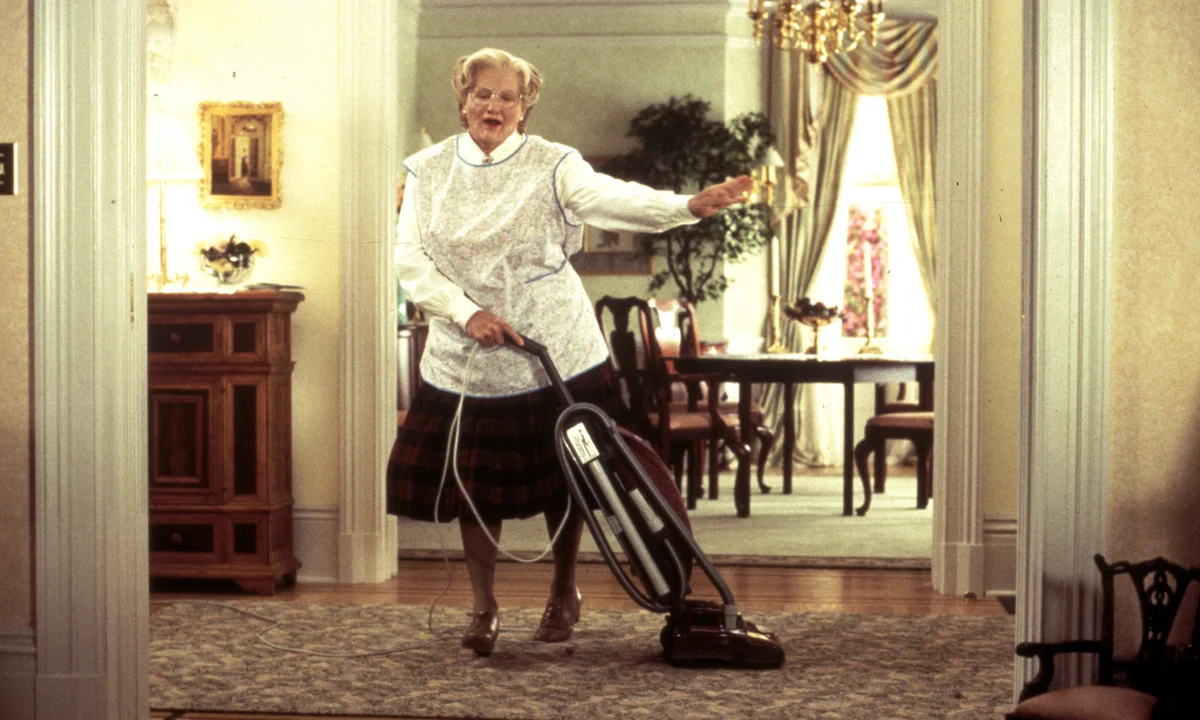
âMrs. Doubtfireâ was released in 1993 and most people know how it ends. It starts looney, becomes sad, blasts off into side-splitting comedy for the next hour and a half, and then, somehow, in its closing frames, becomes as poignant a divorce study as âMarriage Storyâ or others of its ilk. Williams and Field close the film with empathy but realism. This isnât one of those films where everything works out and Miranda realizes she was wrong about Daniel. She realizes, though, that she and the kids were better off with Mrs. Doubtfire⦠and itâs not hard to see where this is going. The film ends the way it should. And while itâs imperfect, often too zany, and includes comedy that doesnât date well, it roots itself with firm empathy for its characters.
It took Daniel Hillard quitting a job and a house-ruining party to end his marriage. Mrs. Doubtfire saves it. The filmâs greatest achievementâaside its comedyâis that Columbus, Williams, and Field lay down the gauntlet that family is worth saving. And, by caring about how divorce affects children as well as adults, itâs one of the most serious takes on the subject Iâve seen. And thatâs saying something when 9/10ths of the film is little but Williams ripping us in stitches.