



(Critic’s Note: This review discusses key plot details of Adrian Chiarella’s film “Leviticus.” Some spoilers ahead.)
The cruelest trick in “Leviticus” isnât that you desire someone who isnât there. Itâs that after scripture, family, and fear are done with you, the person you desire most can start to look like the thing you have to survive.
Adrian Chiarella‘s queer horror debut takes a familiar curse-movie shape and gives it a bruised emotional charge: desire doesnât summon the monster; shame does. The entity may wear the face of the person its victim wants most, but the real horror begins much earlier, in rooms where adults decide that love is contamination and call the damage salvation. Before anyone is chased, strangled, or dragged away by the unseen, the film has already laid out its most frightening idea, that cruelty can be practiced in the language of care.
For someone who isnât naturally drawn to horror, I was surprised by how much “Leviticus” worked on me. I donât mean this as the usual faint praise from a non-fan wandering into the genre and declaring that one of them finally has âthemes.â There are horror films I adore because they respect the audience enough not to treat fear as a reflex test: David Robert Mitchell’s “It Follows,” Robert Eggers‘ “The Witch,” Jennifer Kent’s “The Babadook,” even the recent Australian gut-punch “Talk to Me.” Those films know dread can be more interesting than shock, and horror gets nastier when it has emotional logic.
“Leviticus” doesnât have the formal mystery of the best of them. It can be blunt, and sometimes it explains the nightmare after it has already shown it to us. But when it finds its pulse, it cuts. Much of that pulse comes from the filmâs refusal to separate horror from romance. Is “Leviticus” a horror film strengthened by romance, or a romance using horror as its sharpest weapon? The question becomes less useful the longer the movie goes on. In this world, to love someone is already to risk exposure. A kiss is never only a kiss. Itâs evidence, rebellion, confession, apology, and target practice for a community waiting to punish what it refuses to understand.
Love, After Itâs Been Named a Sin
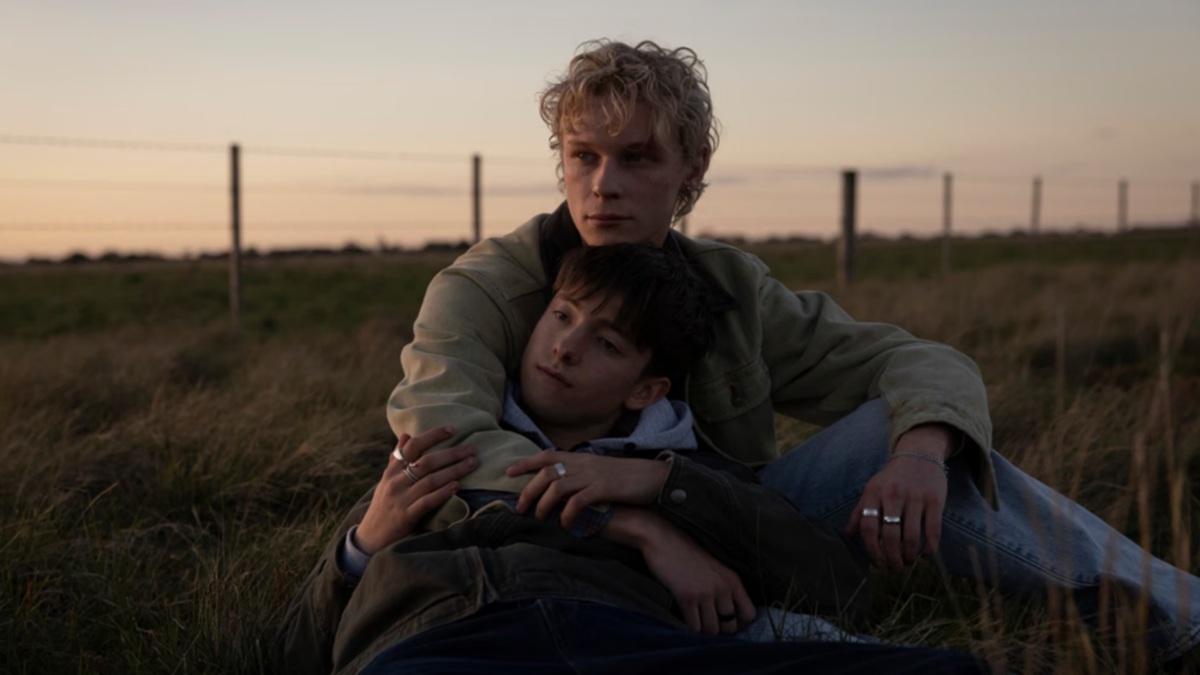
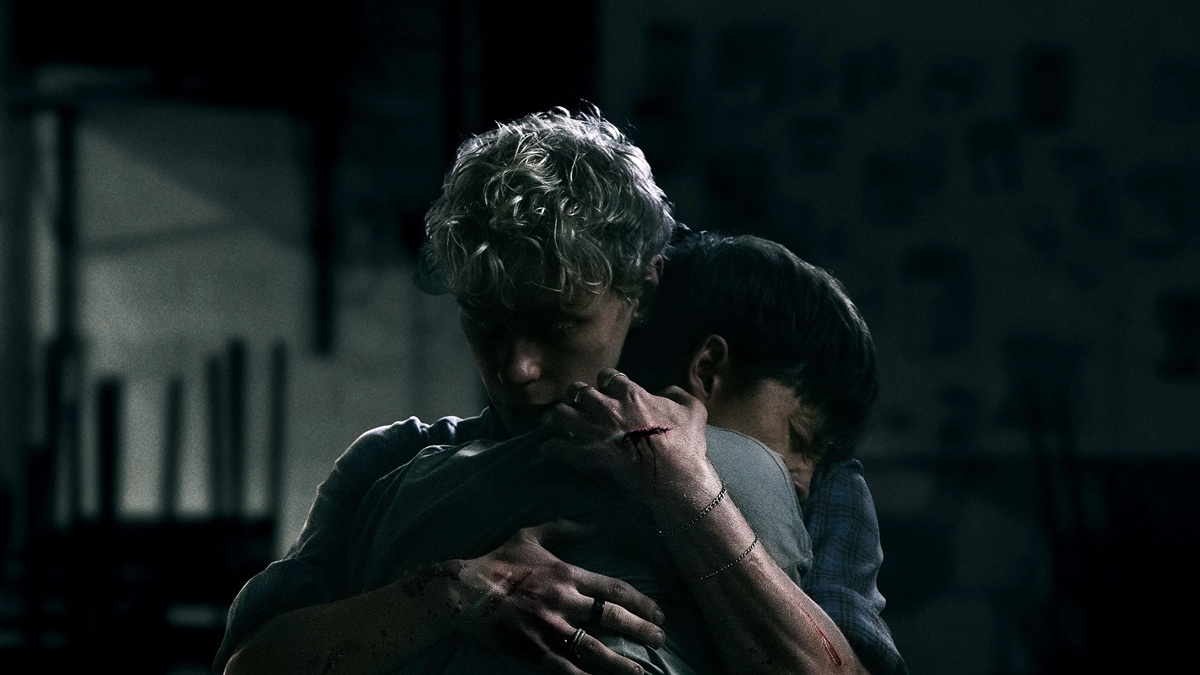
Joe Bird plays Naim Reid, a grieving teenager who moves with his mother Arlene (Mia Wasikowska) to a devout evangelical town in Victoria after his fatherâs death. There, he meets Ryan Whelan (Stacy Clausen), and the two begin a secret relationship built from stolen glances, nervous touches, and the sickening awareness that privacy is the only protection they have.
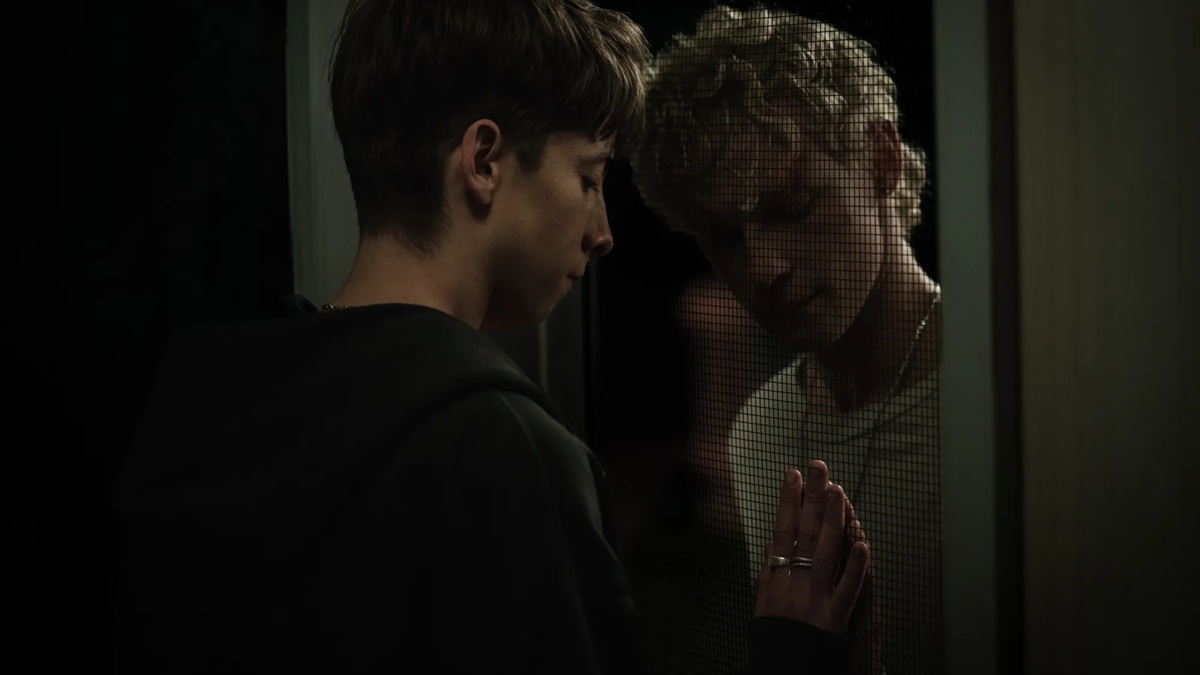
Bird is the filmâs live wire. He doesnât ask us to like Naim at every moment, which is good, because Naim does something awful early on and the movie would be dead if it tried to soften that betrayal into a teachable mistake. After seeing Ryan kiss Hunter (Jeremy Blewitt), the pastorâs son, Naim outs them in a jealous panic. Itâs a vicious act, and Chiarella doesnât launder it into mere teenage confusion. Bird makes the moment hurt because he lets us see how shame can curdle into cruelty before the person carrying it has even learned what to do with himself.
Clausen is just as good as Ryan, whose guardedness never plays like generic teen moodiness. He looks like someone who has already learned that softness can be used against him. When Ryan allows himself to be gentle with Naim, the film briefly loosens. Air enters the room. Then the town returns, the church returns, the parents return, and the air gets sucked out again.
Naimâs shame first takes human form before it takes supernatural form. After he vengefully outs Ryan and Hunter to the pastorâs family, the boys are subjected to a grotesque deliverance ritual meant to purge them of their desires. What follows is not healing but contamination: an unseen entity begins stalking its victims, taking the form of the person they want most and attacking when theyâre alone. The conceit is simple, almost cruelly so. The thing that hunts them looks like the thing theyâve been taught to want in secret.
The romance matters because without it, the curse would be a diagram with jump scares attached. Bird and Clausen give those mechanics a heartbeat. Their scenes together carry the awkward, trembling charge of first love in a place that treats tenderness as contraband. Chiarella gets how desire can make a room feel both larger and more dangerous. When the boys are alone, they get a few moments to imagine a self not organized around fear. Of course, the monster learns to exploit that. This is a film where intimacy has already been turned into a crime scene before the supernatural even enters the frame.
The title says as much. “Leviticus” is not subtle, but subtlety isnât always the right instrument for a blunt-force history. The book has been used, in certain hands and certain rooms, as a cudgel against queer people. Chiarella knows the weight of that association and doesnât try to disguise it in allegorical fog. Maybe the title is too direct. Maybe it has all the gentleness of a door slammed shut. But the film is dealing with people who have built entire systems of cruelty around selected verses, and in that context, bluntness can feel less like overstatement than refusal.
The Soft Voice of Religious Cruelty
The filmâs most disturbing sequence may not be one of the entityâs attacks. It may be the ritual that gives the entity permission.
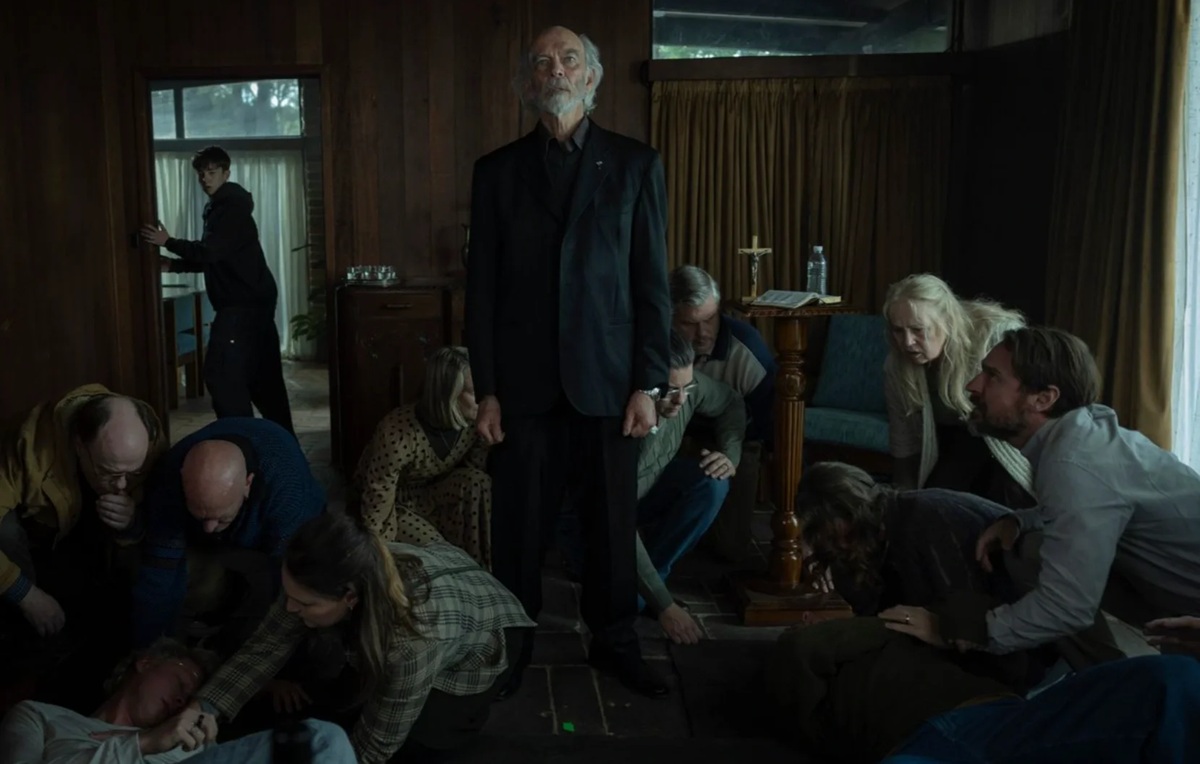
After Ryan and Hunter are outed, Hunterâs parents bring in a âdeliverance healerâ to purge the boys of their homosexual desires. The scene is staged as spiritual intervention, but it lands like abuse with better lighting. Bodies convulse. Boys vomit, scream, and collapse under the pressure of adults who have mistaken volume for grace and violence for healing. Nicholas Hope, as the healer, has the grotesque authority of a man who knows how to make a scam look holy. He isnât terrifying because he seems powerful. Heâs terrifying because the room has agreed to treat him as if he is.
Chiarella is too smart to make âreligion badâ the whole argument. That would be a bumper sticker, not a movie. Instead, heâs after something more everyday and more poisonous: faith turned into policy, doctrine turned into parental instinct, love made conditional until it barely resembles love at all. The horror is not that people believe. Itâs that belief becomes a machine for deciding who gets to belong and who must be corrected.
I grew up close enough to religious conservatism to know the temperature of that room. The polite voice. The closed circle. The terrible confidence of people who think breaking you is a form of care. Iâm not the viewer most directly addressed by “Leviticus,” and that matters. But Iâve known people, both friends and family, who have had to negotiate their sexuality against the expectations of a conservative religious world. Watching the film, I thought about them often. Not because their experiences were as extreme as what Chiarella dramatizes, but because the emotional architecture felt painfully familiar: the judgment, the fear, the careful vocabulary of concern that can conceal a devastating lack of acceptance.
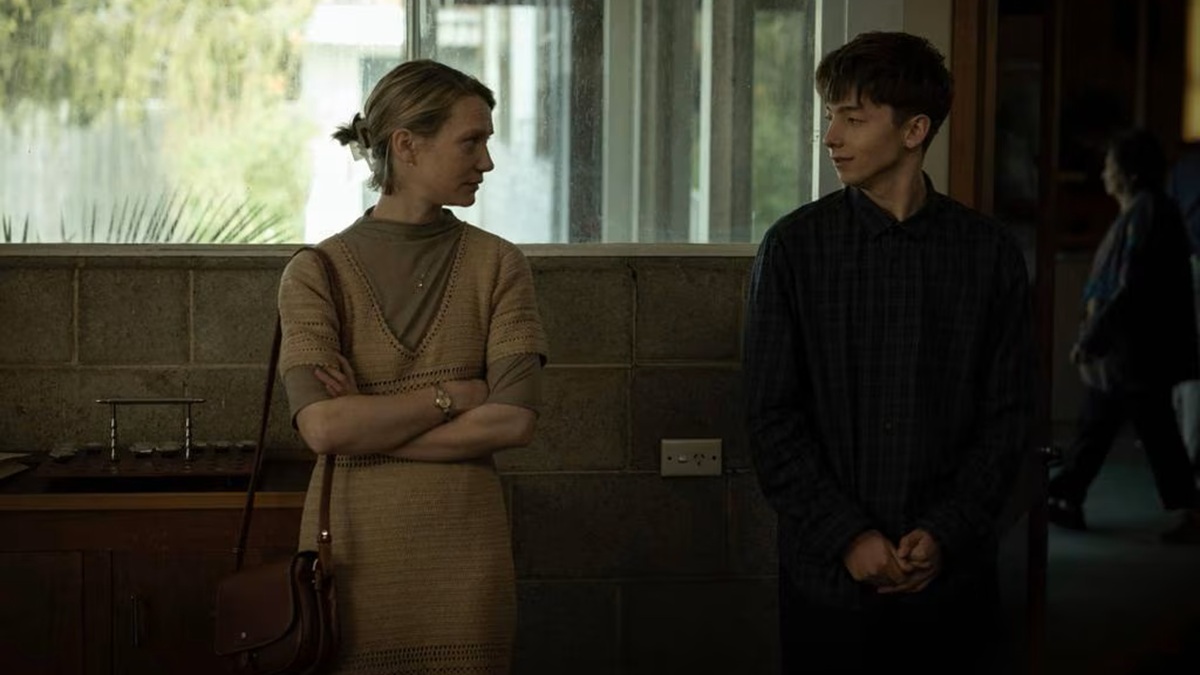
Mia Wasikowska gives that cruelty its most recognizable face. As Arlene, Naimâs mother, she doesnât play a horror-movie zealot. No bug-eyed speeches, no operatic piety, no Margaret White thunderstorm cosplay. Wasikowska has always had a curious edge onscreen, a flicker of mischief that could tip into danger even when she was younger. Here, that quality has hardened into something quieter and more unnerving. Arlene is watchful, composed, loving in a way that feels pre-negotiated. She seems to have already decided which version of her son can survive.
That makes her more frightening than the entity in some scenes. The monster announces itself through violence. Arlene doesnât need to. She is the parent who thinks survival means compliance. She sees the hatred outside and decides the answer is to make her child smaller, quieter, less visible. When she admits that she knew the consequences of the ritual but believed it was necessary, the film lands on one of its ugliest ideas: some parents would rather wound their children privately than watch the world wound them publicly. The wound doesnât get gentler just because it comes from a hand that once held yours.
âLeviticusâ: A Familiar Curse, Given a Queer Ache
The “It Follows” comparison is unavoidable, though it shouldnât swallow the movie. Both films use a pursuing entity tied to desire. Both understand that dread can be more frightening when it doesnât hurry. Mitchellâs film keeps its metaphor slippery enough to breathe: sex, disease, adulthood, trauma, consequence, all drifting in and out of focus. “Leviticus,” on the other hand, is far more explicit. Its queerness is not subtext, not a buried reading, not something waiting to be unlocked by a clever viewer. The boys are being attacked because the world around them has already declared what they feel wrong. The entity only gives that judgment teeth.
That directness gives the film force, but it also limits its mystery. Chiarellaâs images often know what theyâre doing before the script decides to underline them. Ryan talking to empty air. Photo booth pictures showing him kissing an invisible figure. Public spaces that suddenly feel like traps because desire has left evidence behind. These moments are strong because they donât beg to be decoded. Later, when the entityâs rules become clearer, the dread thins a little. It appears when the victim is alone. It takes the form of the person the victim desires most. It grows stronger over time. No one knows how to stop it. The rules work, but theyâre tidy in a way that slightly domesticates the nightmare.
The scare construction has the same problem. Chiarella can stage a jolt, and several attacks have the viciousness they need, but he occasionally seems too pleased with the âis it him or the entity?â trick. The first time the film weaponizes that uncertainty, it stings. After a while, you start anticipating the feint. Horror can survive familiarity, but only when the rhythm keeps mutating. “Leviticus” sometimes lets the audience catch up too quickly.
Still, the best horror here doesnât depend on novelty. It comes from recognition: the face you love turning into the thing that can kill you. That is where “Leviticus” earns its place beside better, more mysterious films without pretending to be their equal. “The Witch” came to mind not because Chiarella has Eggersâ severe formal control, but because both films understand religious enclosure. In “The Witch,” a familyâs isolation turns faith, fear, hunger, and patriarchy into a sealed chamber. In “Leviticus,” the enclosure is a town, a church, a school, a home. Everyone seems to know the rules before Naim and Ryan are even allowed to name what theyâre fighting.
Joachim Trier‘s “Thelma” may be an even cleaner point of contrast: another story of queer awakening, religious upbringing, and supernatural force. But where “Thelma” turns repression inward, making desire feel psychic and unstable, “Leviticus” externalizes it. Chiarellaâs threat comes from outside, wearing the face of what the boys want most. The result is less elegant, maybe less haunted, but also more immediate. It doesnât drift around its metaphor. It grabs it by the collar.
And, yes, “Leviticus” also belongs to the recent run of Australian horror films that find terror in grief, bodies, family rot, and the dead spaces of ordinary life. “The Babadook” turned maternal exhaustion into a monster. “Talk to Me” made possession feel like a party game for teenagers who have mistaken access for understanding. Chiarella adds religious persecution and queer longing to that conversation. The supernatural here isnât decoration. Itâs damage learning how to move.
Choosing to Look Away, Choosing to Leave
Because “Leviticus” has such a clean emotional engine, its weaker parts are harder to ignore. The town could use more texture beyond its function as a pressure cooker. The bullies, the parents, and the church community sometimes feel arranged around Naim and Ryan rather than fully alive outside them. Arlene is compelling enough that I wanted more of her, partly because Wasikowska keeps suggesting rooms of history the script only peeks into. Even the entity, chilling as an idea, loses some of its awful power once the film starts itemizing what it can and cannot do.
But Chiarellaâs debut has a pulse, and pulse counts for plenty. The movie doesnât need to reinvent horror to work. Its influences are visible, and sometimes openly so. Its metaphor can also be blunt. At moments, it tells us what its images have already made plain. Nonetheless, the film keeps returning to an idea that still feels raw: the scariest thing here isnât death. Itâs the theft of self-trust. The ritual doesnât merely hurt the boys; it teaches them to fear what they want. It turns longing into surveillance, and it makes love feel like bait.
That is why the final movement works even when the mechanics strain. Naim and Ryan choosing to leave together is not a clean escape. The entity is still there. The world that made it is still there, too. But the decision to keep moving matters. When Naim glimpses the threat outside and chooses, for once, not to give it his full attention, the film finds its bruised little measure of hope. He doesnât defeat the monster. He refuses to organize his life around it.
For a film about persecution, “Leviticus” is careful not to leave its boys only as symbols of suffering. They are frightened, damaged, angry, reckless, and still capable of hurting each other. Naimâs betrayal of Ryan matters because the film knows shame doesnât only wound inward. It can make a person dangerous before he has learned how to be honest. Ryanâs anger matters, too, because forgiveness should not be treated as the automatic reward for shared victimhood. Their love is messy because they are young, scared, and surrounded by people who keep trying to turn their bodies into battlegrounds.
That, more than the mythology, is what makes “Leviticus” work. It reached me across a few distances: as someone who doesnât usually run toward horror, as someone outside the queer experience it dramatizes, and as someone who nevertheless recognized the language of religious fear. The film doesnât ask me to claim a wound that isnât mine. It makes the cost legible enough that looking away would feel dishonest.
The monster is not desire. The monster is what happens after desire has been named a sin, beaten into confession, and sent back into the dark. By the time Naim and Ryan board that bus, still hunted but no longer still, “Leviticus” has earned its hope the hard way. Not the fantasy that love can save them from everything. Just the stubborn, necessary belief that love is worth choosing even when fear keeps pace outside the window.


Adrian Chiarella’s “Leviticus” had its world premiere on January 23, 2026, at the 2026 Sundance Film Festival in the Midnight section. Maslow Entertainment released the film in Australia on June 18, 2026, with Neon releasing the film in the United States the following day. Follow us for more coverage.
Related: ‘Ted Lasso’ & Men’s Mental Health | The Horror of ‘Obsession’ | ‘That Friend’ Tribeca Review




