“Mortal Kombat II” is a fitting sequel. Its advanced billing may have done it a disservice, poising Karl Urban’s ‘Johnny Cage’ as its defacto promise. In reality, the film is bigger, filled with more cast members and it’s ultimately darker. There’s fan services galore, but I noticed a film that despite it wasn’t trying to cram every fatality or special attack into battle scenes for the sake of fan service alone. And more importantly, it serves as the end story that Part 1 promised. And the film did what I hoped in the inclusion of its ultimate villain, Shao Khan — it didn’t minimize him or cartoonize as in 1997’s “Mortal Kombat: Annihilation.” Here he is truly scary, immovable, and the towering giant he deserves.
“Mortal Kombat II” here feels like a video-game version of the “Avengers” ‘Infinity Saga.” “Mortal Kombat” assembled the pieces (“Infinity War”) and “Mortal Kombat II” completes the saga (“Endgame”). Of course this film is not as intense and world-building as those films, but the comparison feels apt. The film starts in another dimension where Shao Khan has defeated this realm in ‘Mortal Kombat’ 10 times and became the ultimate ruler. He vanquishes (murders) the king and takes his daughter, Kitana (Sophia Xu as a young girl) as his ‘daughter.’ She’s trained over the years (Adeline Rudolph as an adult) by one of Khan’s confidant’s, Jade (Tati Gabrielle) as an assumed ally of Outworld (Khan’s realm). But we know more is going on inside her than she lets on.
Karl Urban is Extremely Likable
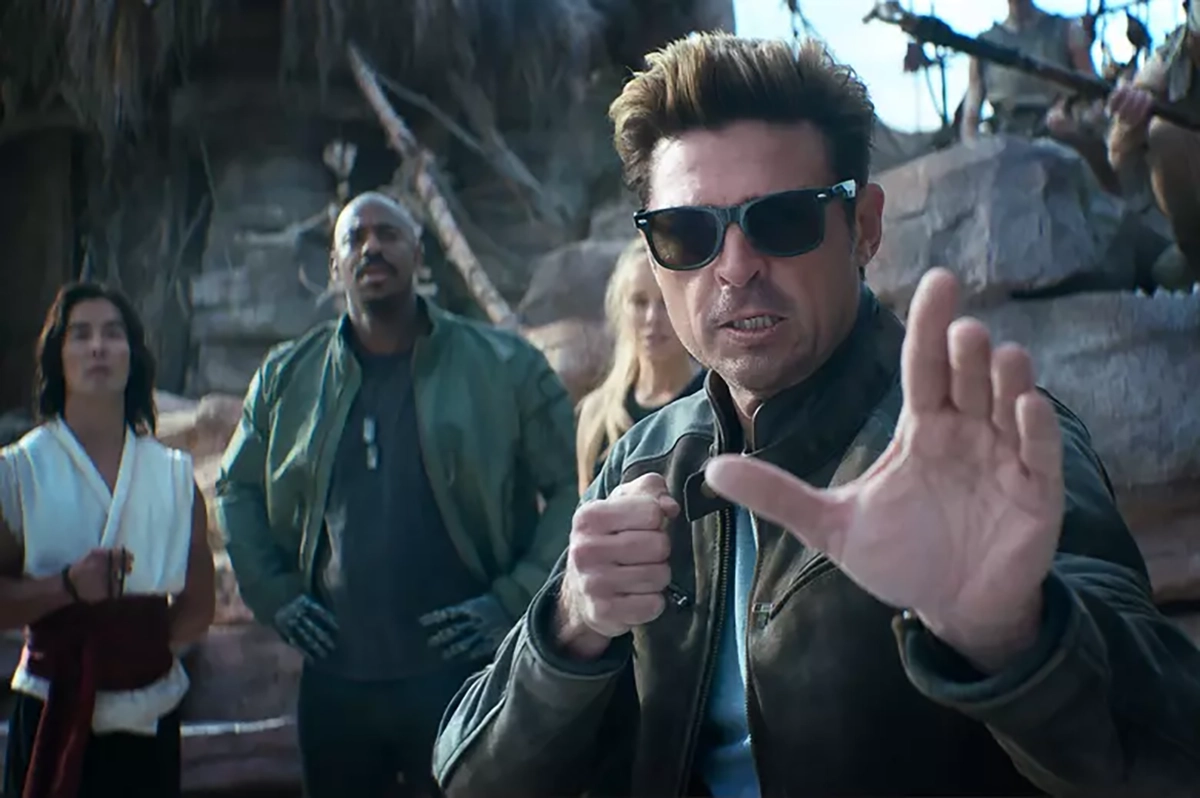
This is juxtaposed between Lord Raiden (Tadanobu Asano) and Earth’s other heroes from the last film trying to recruit Johnny Cage (Urban) into their fold. Truthfully, Cage’s recruitment feels hasty and a bit forced at first, but Urban — completely shedding his menacing brutality from “The Boys” and becoming instantly likable — makes the transition work. He brings a lot of cockiness and fanfare without feeling like those are all there is to his identity, as happened with Linden Ashby’s portrayal in the 1995 film. There’s a feeling of worthlessness and has-been status that Urban imbues into Cage that makes his reawakening towards the film’s ending feel earned.
“Mortal Kombat II” then becomes a collision of hard-hitting battle sequences mixed with fan service that never feels over the top. We see fighting locations like the courtyard, the acid pool, and the pit in ways that make them feel real while tying them to the video games that launched them. We even get a cameo from one of the game’s creators, Ed Boon, serving Johnny Cage a whiskey before he’s tapped to enter the tournament. And I loved the way that the fighters themselves are ‘selected’ to fight: a white (or red, for the outworld fighters) glow illuminates them and they are teleported to the battlefield. Signature attacks line the proceedings. We see Shao Khan’s shadow move, Kung Lao’s hat/teleportation, and Johnny Cage’s shadow kick. I won’t ruin some of the other signature moves as they brought applause from the audience. This is a film for fans above all.
A Film For Fans
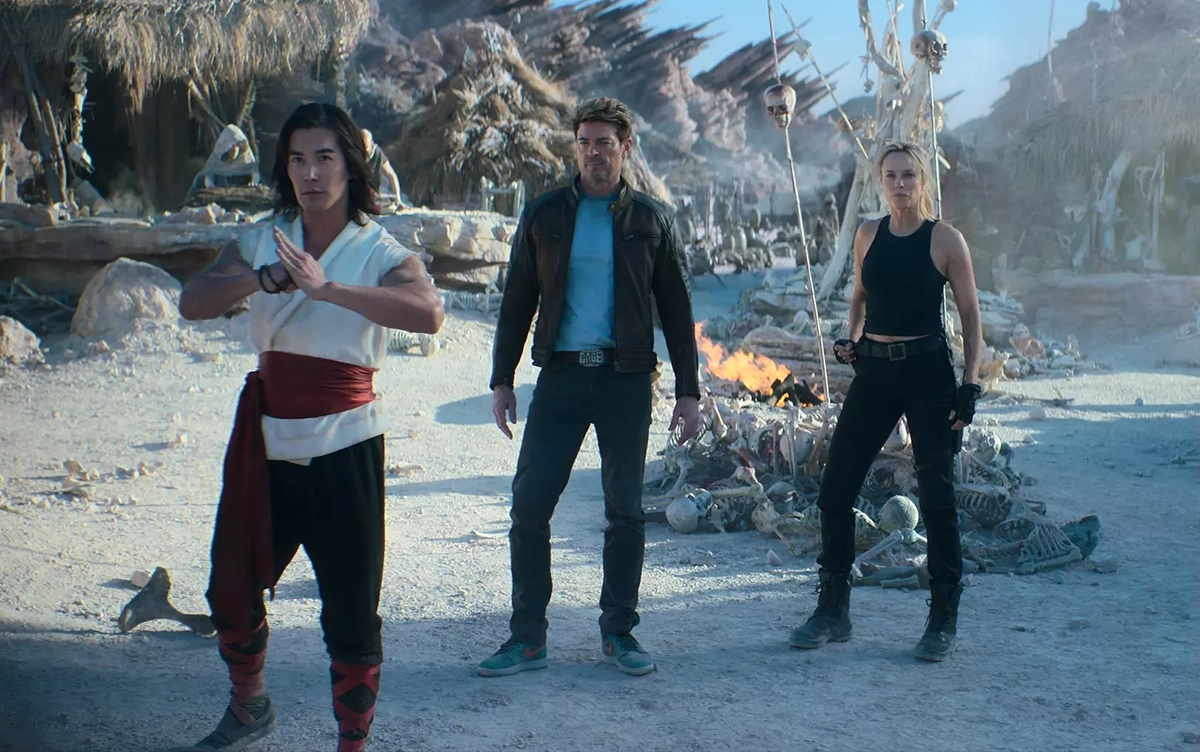
That’s not to say ordinary filmgoers can’t enjoy it. The plot isn’t overly deep (a group of heroes must stop Shao Khan from dominating Earth), but the fights scenes are fantastic. A battle between Liu Kang and Kung Lao (no spoilers as to why) is one of the most intense of the film — it really feels like mortal combat. A fight between Johnny Cage and Baraka is one of the film’s funniest sequences (Baraka is played by CJ Bloomfield with absolute zeal and humor) is sillier but still a crowdpleaser. And other fights — including Sonya Blade, Sindel, and Shao Khan himself — are intense and punishing. We even see the appearance of Scorpion again (Hiroyuki Sanada reprising the role well) and the introduction of a Noob Saibot (Joe Taslim) as Sub-Zero/Bi-Han transformed.
A major portion of the plot revolves around Kitana and Jade, and the actresses show a real bond despite the wedge driven between them. Cole Young (Lewis Tan) from the previous film shows up too, though he has less to do this time around.
A Worthy, Darker Sequel
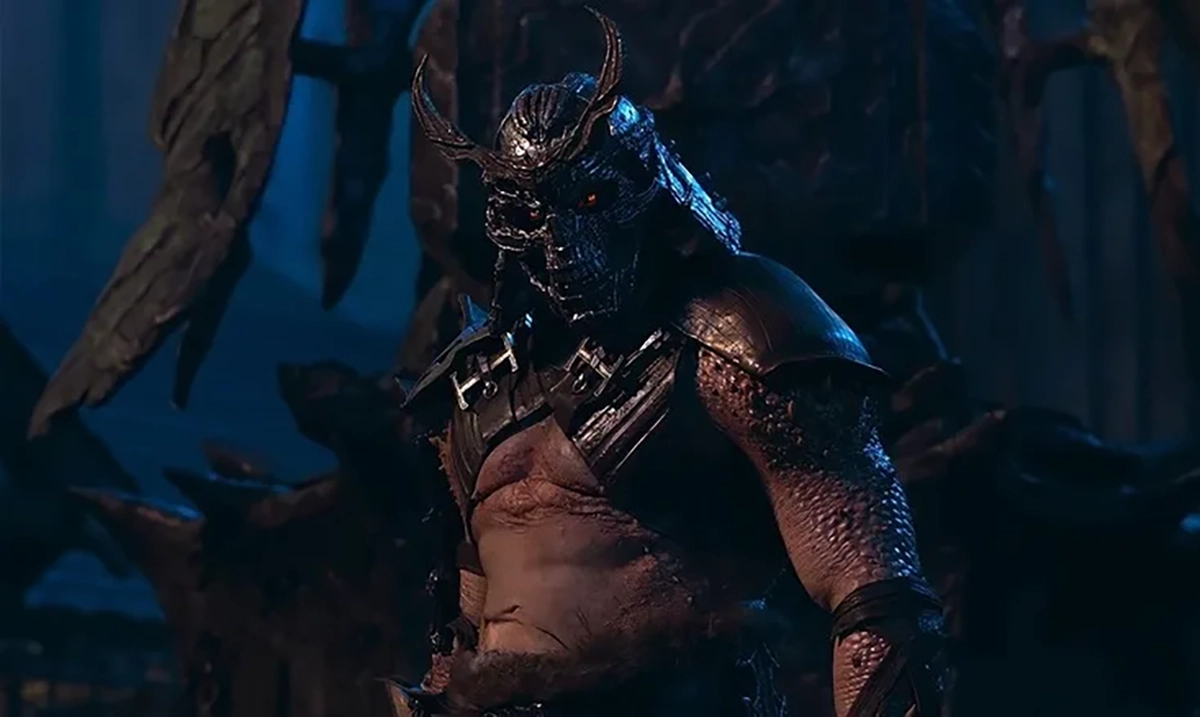
One criticism one could make about “Mortal Kombat II” is the same one I lodged initially over “Avengers: Infinity War.” The cast and characters are so vast, we get less character time and development than we hoped. And so much time is devoted to SHao Khan (both fighting and governing) that he feels less like an enigma and more common. But Martyn Ford plays him extremely well, and the film’s CGI team makes him feel as immense and massive as he ought. His war hammer swings with merciless might. He really seems someone that can’t be beat.
That criticism is short-lived, however. “Mortal Kombat II” is a pleasing action/adventure film that is high on fan service, even if it ends predictably rather than explosively. The cinematography by Stephen F. Windon is darker and more serious this time around, especially in and around Khan’s domains. And I liked that fact that Kano (reprised hilariously by Josh Lawson) was less objectively evil (although still opportunistic) and had fun scenes with Cage. And Urban bends totally into an aging Cage, using his trademark sunglasses and middle finger to fix them in place perfectly. The film leaves room for more: it’s not evident whether the producers will make another, but they could. Yet all-in-all, this go-a-round is more fleshed out, entertaining, and will likely be worthy of rewatch status once it’s released on streaming.