






Themes of family are often present in independent film. They are, after all, about exploring emotions, connections, and dialogues more than mainstream movies. Veteran indie actor Timothy J. Cox is no stranger to these types of films, especially ones exploring relationships or role models. His earlier work, such as his co-starring role in âBeauty Queen,â showed the positive impact of a good father. While raunchy, the film âDoll it Upâ showed the necessity of working on relationships once things get difficult. And while he was a negative influence in the short film âSissyphus Unbound,â it still showed the relevance of how role models can often make or break our path.Â
It was no surprise, then, that when we reviewed Coxâs new filmââSundays with Dadââweâd once again come across these relevant themes. This time, not only was Cox acting, however, but heâd also written. The short deals with an aging father and adult son navigating the waters of their relationship after his motherâs death. It’s explored more from Coxâs on-screen fatherâs side, played by an excellent George R. Hildebrand. The film is touching in the ways it portrays their father/son relationship, and the takeaways are personal and relatable.Â
‘Sundays with Dad’
Following âSundays with Dadââwhich is currently in the festival circuitâwe were fortunate enough to catch up with Tim for a candid discussion about the film, its themes, and his inspiration.Â
Of note, Cox talked about the excitement of watching a completed film project on the big screen. He spoke of âSundays with Dadâ screening at the then-upcoming Catalano Film Festival (the festival took place on March 1, 2025), which was nominated for âBest Actorâ for George R. Hildebrand along with the script being nominated. âItâs as really nice community around here,â Cox stated, speaking of the Ohio-based festival. âItâs one of the industryâs best-kept secrets. Thereâs a lot of really great talent around here,” he said. “Weâre just all around here trying to tell our stories as best as possible.âÂ
Additionally, Cox stated the film community has been inspiring in many ways. Cox, who moved to Ohio from NYC, said that in many it ways like âstarting over.â âI started [writing],â Cox said, âbecause in many ways I wanted to see if I could do it. 35 years of being around playwrights and actors⦠I hoped that some of that would have rubbed off on me,â he joked. âI wanted to sit down and write something personal that if I⦠if I wanted to watch a movie or act in a movie⦠it would be something Iâd want to do.âÂ
Cox also stated the agreeability of working in Ohio, finding that social media and festivals yield closer-knit results. This was opposite of NYC, where the opportunities were so plentiful that it could be overwhelming.Â
On Neil Simon and Working with Director Tom Angeletti
On the motivations for writing âSundays with Dad,â Cox elaborated that his previous two writing attempts, âAfterâ and âHard Truthsâ were heavier. This time he wanted to write something more along the lines of pure comedy. However, sitting down to write itâand hearing the charactersâs voicesâled to a different result.Â
âThe inspiration for [âSundays with Dadâ] was Neil Simon,â Cox stated. When I was in High School Iâd see all of his plays and all of his movies. I thought of âThe Sunshine Boys,â and it hit me in a different way.â Cox also stated that part of the inspiration for the film came from seeing his co-star, George R. Hildebrand, in a production called âMy Dear Marcy.â âI didnât know George,â he said. âThis guyâs good [I thought]. If I ever write a scriptâwhatever it would beâthis guy could play my father.â A year or so later Cox approached him with the script that was written with Hildebrand in mind. He said yes, and things just grew from there. Cox also stated that playing father and son on-screen caused the project to grow, naturally, and it was somewhat easy to do.Â
Cox also spoke about working with Director Tom Angeletti, who he started talking to over Instagram. âWe had a lot of the same interests, and a lot of the same things that we loved.â He credits Angeletti for Coxâs own desire to start writing. âI had always started writing, but never finished something from beginning to end. I had [written]17 pages (for a film called âAfterâ). And I thought, âIf Tom likes, it, thatâs how Iâll know that itâs good.â
Asked specifically about whether Cox had drawn specifically from his own father, he was quick to say that there were elements of his own father in Ben (Hildebrandâs character). âHe was a warm, loving person with a good sense of humor. However, a lot of the other things were me trying to write to what I saw in Georgeâs personality in other projects.â Cox elaborated he felt he was a rarity among writers he knew for writing for a specific person in mind.Â
A Father/Son Relationship and Grieving in Different Ways
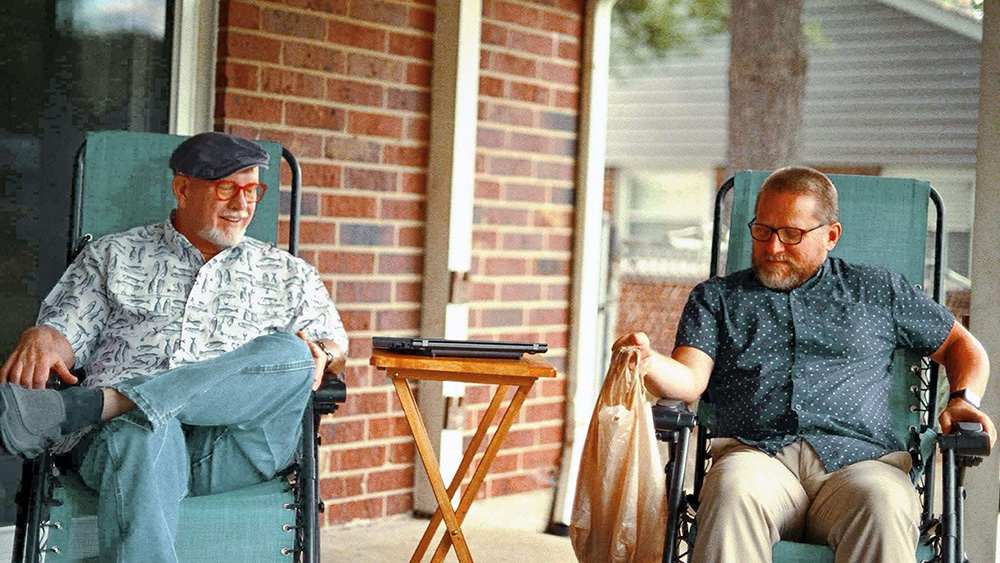
âI think also that [the actors]like the challenge I give them. The first thing George worked on was the mammoth monologue I gave him.â Watching the film, itâs easy to pinpoint the care Cox put into the writing and also the deference with which Hildebrand treated the material. Itâs a testament to Coxâs ability to write for a specific person and a specific personality that likely contributed to this special feeling.Â
Cox elaborated on the relationship between Jason (Cox) and his father, specifically that he imagines the two have always had a special relationship, with the recent passing of his mother and Benâs wife possibly pushing the two closer together. âI like to imagine that Jason always went over there [for Sundays and sandwiches], with his wife and grandsonâ Cox said. âHowever, heâs probably gone over by himself in the few weeks or months since his wife mother died.â What works about their bond, truly, is the care that Cox put into the script, as well as the dedication Hildebrand put into his performance, both of which show in spades.Â
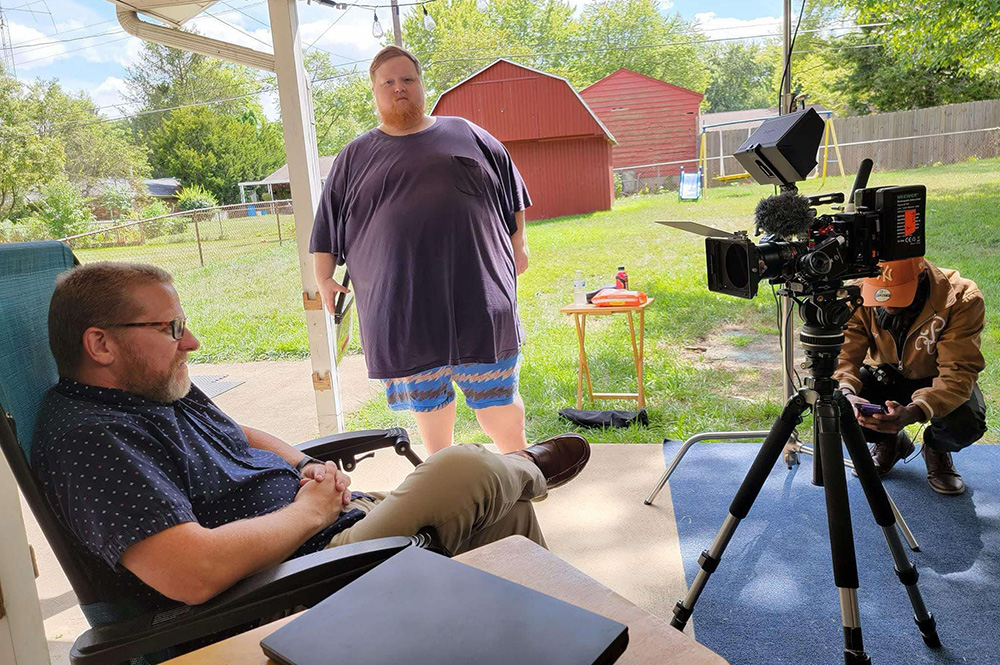
What also shows, is the comfortably feeling of home Cox and Cinematographer Jake Reynolds were able to get out of the set, which takes place almost entirely on a suburban home patio. When asking Cox about the set and its authenticity (a kitchen scene reminds one of their own kitchens growing up, and not Hollywood sets), he was quick to respond. âThatâs my home,â he laughed, finishing âmy wife will be so happy.â Cox also elaborated that the home, while not overly big, seemed to fit Benâs character perfectly. It also brought to mind questions of how often he gets out, now that his wife has passed, or how big the house may feel now that he is alone in it.Â
And itâs that idea that furthers the overall point of Coxâs film, or what he hopes that people will get out of his film. âMy hope, is that after seeing this⦠call your parents.â He referenced an Oscar acceptance speech by actor J.K. Simmons who said the same thing, and continued âas we get older, we think about time and how thereâs not enough of it. One of the reasons Jason visits his father⦠the chances of him getting that call that Ben himself has passed away are more likely.â He paused. âI hope this film puts a smile on peopleâs face.âÂ
Empathy and Relatability is the Big Thing
Cox also spent some time talking about the film’s plot, and taking care to keep it out of slapstick territory. âIf we didnât play this rightââCox is here talking about the admission his father makes that he has hired an escort to keep him company and help with choresââit could have become sophomoric. And Jason could have really seemed like a sitcom character. However, smartly, Cox uses the narrative hook and conversation between the two near the filmâs conclusion as a way to encourage empathy and understanding. âJasonâs concerned⦠but I think he understands it at the end. Empathy is the big thing,â he said. âAnd relatability.âÂ
And if there’s one thing that Cox did well with “Sundays with Dad,” empathy and relatability were its key takeaways. As mentioned in our review, coming alongside the points of view of both Cox’s Jason and Hildebrand’s Ben is one of its strong suits. It makes you feel better about life after watching it. And hopefully it will entice viewers to either remember their parents fondly, or, as Cox stated, to call them while the time is still right.
Watch ‘Sundays with Dad’ for Free on Streaming
Finishing up his talk with us, Cox covered some additional topics he’s wrote or is in the process of finalizing. “After” and “Hard Truths” are two other films Cox wrote, and he talked about “Good Luck to Me,” a third writing project he completed which will hopefully film this spring. Both “After” and “Hard Truths” are available to watch on the free streaming site Reveel, as well as “Sundays with Dad” and other indie films.
For more information about Timothy J. Cox and his projects, you can follow him on Facebook at Timothy Cox/Actor, Â Instagram at Timothy J. Cox, or BlueSky at Timothy J. Cox. Follow us for more information about “Sundays with Dad” as it becomes available and news for other indie filmmakers.
*This interview has been edited for clarity.Â




