





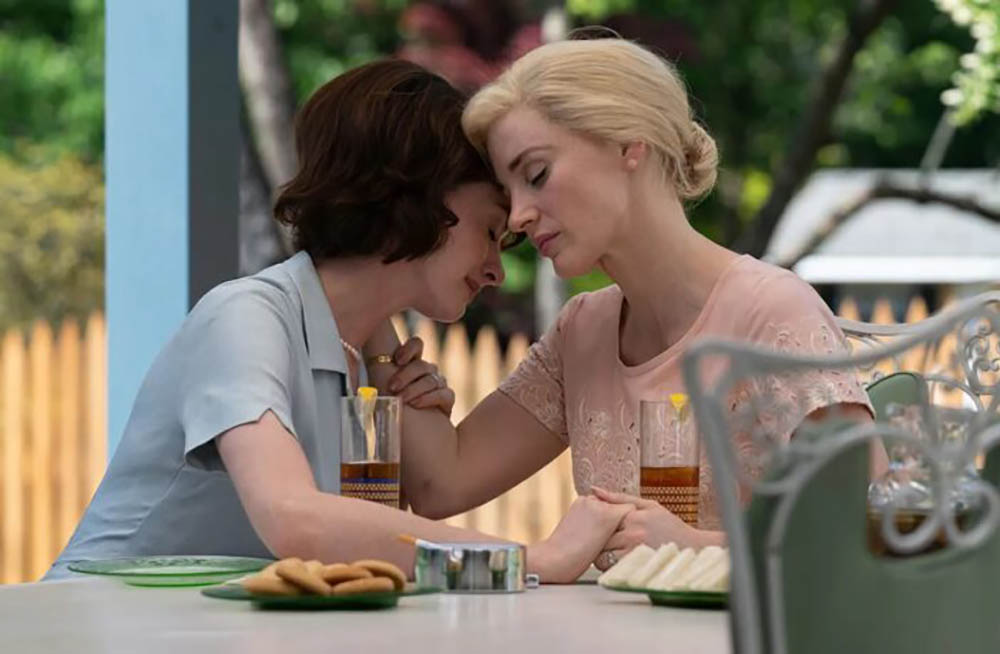
âMothersâ Instinctâ (directed by Benoît Delhomme and written by Sarah Conradt) is the second iteration of the story, being a remake of the 2018 French film âDuellesâ which, in turn, was a loose adaptation of Barbara Abelâs 2012 novel “Derriére la haine.”
Youâd think that yet another version of the story would be weak, like a stiff drink diluted with too much water. Thankfully, that isnât the case with this rendition of the tale.
A Hitchcockian Thriller Set in the 1960s Suburbs
In 1960, next-door neighbors and close friends Alice (Jessica Chastain) and Céline (Anne Hathaway) epitomize the ‘perfect housewives’. They lead a happy family life, with both being married to career men and having 8-year-old sons. When Célineâs son Max dies from a tragic accident, an accident that Alice tried to prevent, the relationship between Céline and Alice changes. In an instant, paranoia and suspicion replace the deep friendship the two once had.
When Alice catches Céline spending time with her son Theo and strange âaccidentsâ start happening with Theo and Aliceâs husband; Alice suspects Céline of trying to âeven the scoreâ for losing her son, creating an even bigger rift between them. Is Céline really trying to kill her family or is Alice, who has a history of mental illness, just imagining it all?
Not only is âMothersâ Instinctâ set in 1960, it feels like it was made in 1960 (if you removed all the cursing, of course). Itâs all beautifully Hitchcockian. Even Chastainâs Alice, her stark blonde hair always in a tight bundle, is reminiscent of those classic âHitchcock blondesâ like Kim Novak and Janet Leigh, who were tough and ice-cold but still victimized because of the stifling era they lived in.
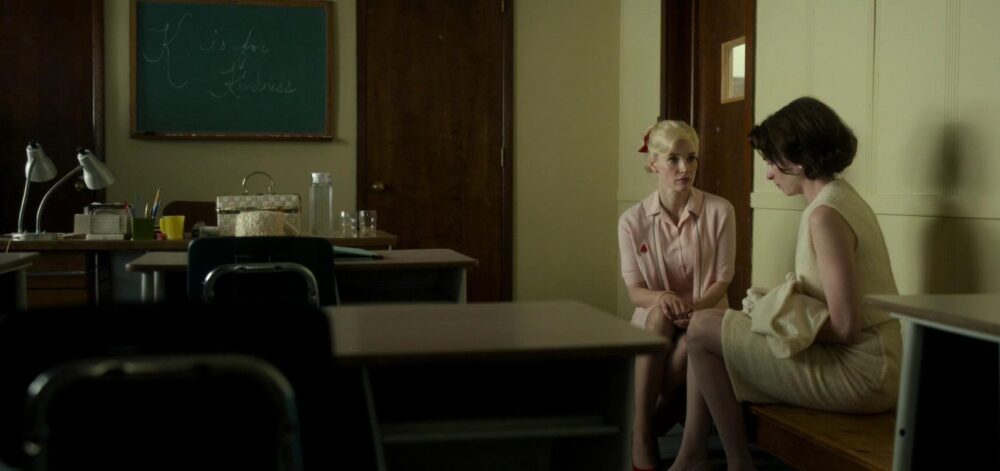
First-time director Benoît Delhomme deftly handles the many nuances of the film, going in the deep end on both the psychology and thriller aspects of the film. Doing double-duty with the cinematography, Delhomme captures the 1960s in the outdoor scenes; with bright colors and cookie-cutter layout of the houses. This runs in contrast to the indoor scenes, where everything looks dim and shadowy; a reflection of the characters themselves and the grief and trauma theyâre processing.
On Gaslighting and Fragile Psyches
If gaslighting irritates you or gives you anxiety, then âMothersâ Instinctâ will have you bouncing off the walls. Gaslighting runs rampant throughout the film, with Alice on the receiving end of the gaslighting from her husband, Céline, and even her son.
The film does a great job of telling us about Aliceâs past, dropping little tidbits of information while delivering blows to her psyche. At the beginning of the film, she and her husband discuss about Alice’s ennui with being a housewife, and he mentions how she used to be an investigative journalist for a big newspaper. He tells her she should go work for a little student newspaper at a nearby school. Itâs a condescending and strange thing to say to a woman whoâs obviously wanting more out of life; and Chastain’s performance carries the weight of that moment, simultaneously looking hurt but giving him a âthanks honeyâ smile just to prevent having an argument.
Hathawayâs performance as Céline doesn’t exude as much gravitas as that of Chastain, but she still delivers devastating feelings of grief and isolation after Célineâs son dies. Her husband becomes emotionally distant and with Alice suspicious of her, she finds herself isolated in the middle of a huge suburb. Suddenly, backyard barbecues and parties proceed around her, none of which sheâs invited to. As the film progresses, though, Hathawayâs performance becomes more robotic and less interesting.
Nearly a half-century has passed since Alfred Hitchcockâs death but itâs great to see that his spirit lives on.





