






Wim Wendersâ “Anselm” is a striking visual feat, aiming to be both a history lesson and extended primer on the work of the pioneering German visual artist Anselm Kiefer. But the ambitious scope also ends up resembling an indirect tribute to another artist Wenders has long revered: Andrej Tarkovsky. Tarkovskyâs cinema taste ranged from expansive period epics (“Andrei Rublev”) to elliptical personal narratives (“The Mirror”), whose bold imagery and voiceover narration conjures the experience of a guided tour through a museum of memories. Wenders, with varying levels of success, replicates this strategy, reworking the traditional documentary structure into something more of an avant-garde biopic. And the presentation of Kieferâs worldâthe interior of his sprawling studio, and the external of his countryâs complicated pastâsuggests a battle for validation through isolation, an ongoing war for inner peace that has plagued Tarkovskyâs protagonists and many an art monster.
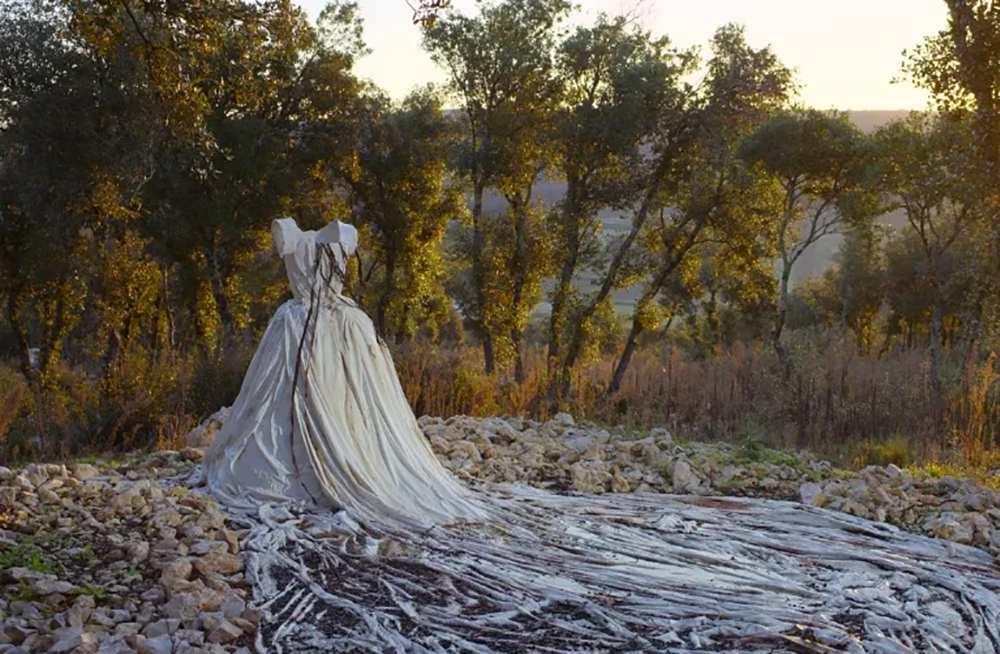
Similar to “Pina” (2011), Wim Wenders eschews the conventional talking-heads approach in an unapologetically admiring profile. And in both “Pina” and “Anselm,” Wenders employs 3D to emphasize each subjectâs passion, immersing the viewer in the singular art that had earned them international accolades. The introductory shot of “Anselm” features a smattering of Kieferâs extraordinary wedding dress sculptures, establishing a mood that veers from melancholy to horror-show. Over the course of the filmâs 90-plus minutes, Wenders repeatedly revisits these dresses; some have the bottoms frayed and splayed out, others with objects placed where a human head would be, and the 3D effects give them a ghastly glow, that of floating corpses. Itâs mesmerizing and engaging, implying a tussle with mortality which emphasizes the repurposing of a wardrobe item thatâs said to only be used once in life.Â
An Artist Looking Back
Reuse is a theme throughout Kieferâs work, or at least, Wendersâ summary of the manâs life and art. The camera observes Kiefer with a trusty blowtorch, setting fires that his assistants will extinguish. And yet, the film doesnât linger on these scorched canvases, moving onto the next with an unromantic gaze on the next project. What one makes of these little fires might be extrapolated in the context of considering Kiefer the provocateur, the pyro-art an apt metaphor for Kieferâs explosive early career. Born in Nazi Germany in 1945, Kiefer earned infamy in the late 1960s for taking portraits of himself doing the heil (a crime in post-war Germany) salute around a variety of his countryâs landmarks. Over the years, Kiefer would maintain this was an active protest against forgetting the past, although it did tarnish his reputation in his home country.Â
Through it all, Kiefer kept looking back, and Wenders doesnât let us forget that. A series of flashback sequences imagines a boyhood Anselm (played by Anton Wenders, Wimâs nephew) and a middle-aged version (played by Daniel Kiefer, Anselmâs son) wandering through nature, plumbing the great outdoors for inspiration. Here, Wenders is showing much and telling little, and itâs distracting to have the director put himself in between the audience and Kiefer. The forced search for explanation isnât necessary, so the blend of fact and fiction feels more like a bungled homage to Tarkovskyâs brooding autofiction (“Ivanâs Childhood”) than a cohesive part of nonfiction storytelling. And while the film closes with an awkward reunion between real-life Anselm and his child self, the preceding scenes show him flipping through a family album, his melancholy face so revealingâbottom lip ready to quiverâand aware of how fast life moves.
An Infectious Documentary
Shortcomings aside, Kieferâs art through Wendersâ eyes is a marvel to witness, and for those uninitiated, “Anselm” acts as a serviceable career retrospective. And, for those in need of a reunion with Wenders, itâs a cause for celebration that he has two movies (“Perfect Days” debuted at Cannes) out in 2023, six years removed from his last documentary. Itâs always a rush to see that Road Movies banner in the opening credits, and “Anselm” doesnât disappoint when its aim is sure, and the art is allowed to advocate for itself, with Wenders playing the observer. Tarkovsky (to whom Wenders dedicated “Wings of Desire”) looms large here, but so does Pina Bausch, who died before the release of Wendersâ 2011 documentary. Time is a thief, and Wendersâ joy at getting to film his friend at work is infectious, even through the lens of those clunky 3D goggles.Â

“Anselm” is currently available to watch in select theaters.Â




