





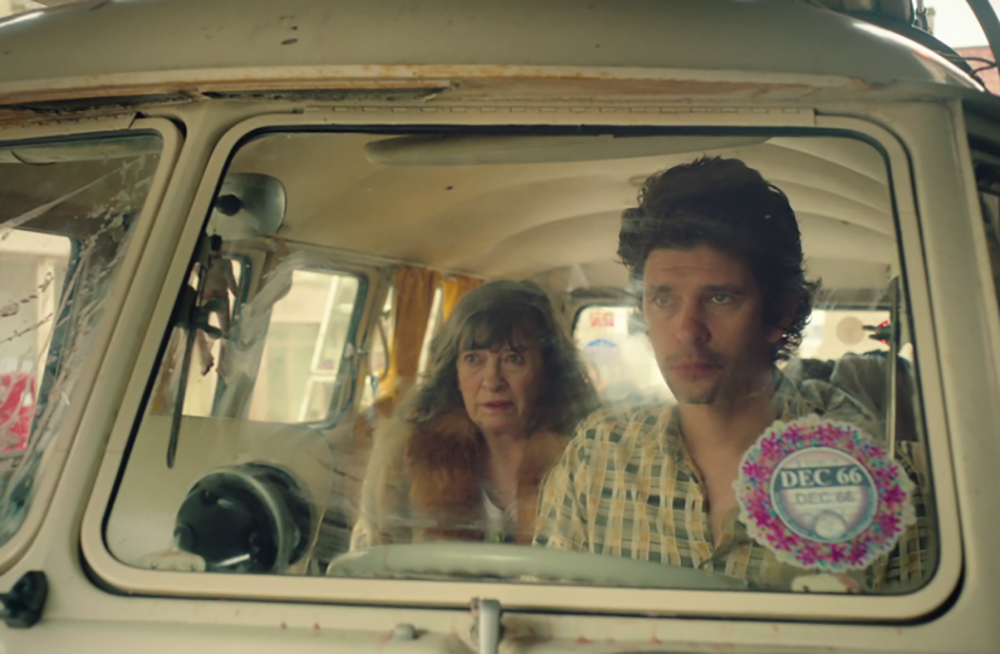
âGood Boy,â the offbeat short film from first-time director Tom Stuart, takes its audience on the lighthearted journey of a restless young man as he drives around in his battered VW van with his mother in the back and a growing sense of desperation. But what starts off as a quirky short ultimately becomes an introspective affair about grief, acceptance, and moving forward.
The film begins with the man, Danny (Ben Whishaw), concentrating behind the wheel of his VW van. In what seemed like an eternity of contemplation on whether to go with his plans, his overbearing mother (Marion Bailey) interrupts him from the back of the van, with her own way of psyching her son up.
âI wanted to ask if youâre sure.â
âWe need this money.â
âItâll work outâ¦Go get âem, tiger.â
It turns out that Danny and Mum have conspired to rob a bank as an act of apparent desperation: they just received a notice of eviction, with their house facing repossession by the same bank theyâre trying to rob.
Dannyâs attempt, however, gets scuppered when an acquaintance from his past shows up at the last minute, wanting to tell Danny something that the latter doesnât want to hear. To let off steam in light of their bungled plan, Danny accidentally fires off his grandfatherâs old shotgun, shooting a pigeon in the process. This pigeon, fighting for its life, sends Danny on a gradual tailspin; culminating in his confronting of his grief and pain.
[Related Short Film Review: âBloomâ Uses Nature as Metaphor for Personal Healing and Growth]
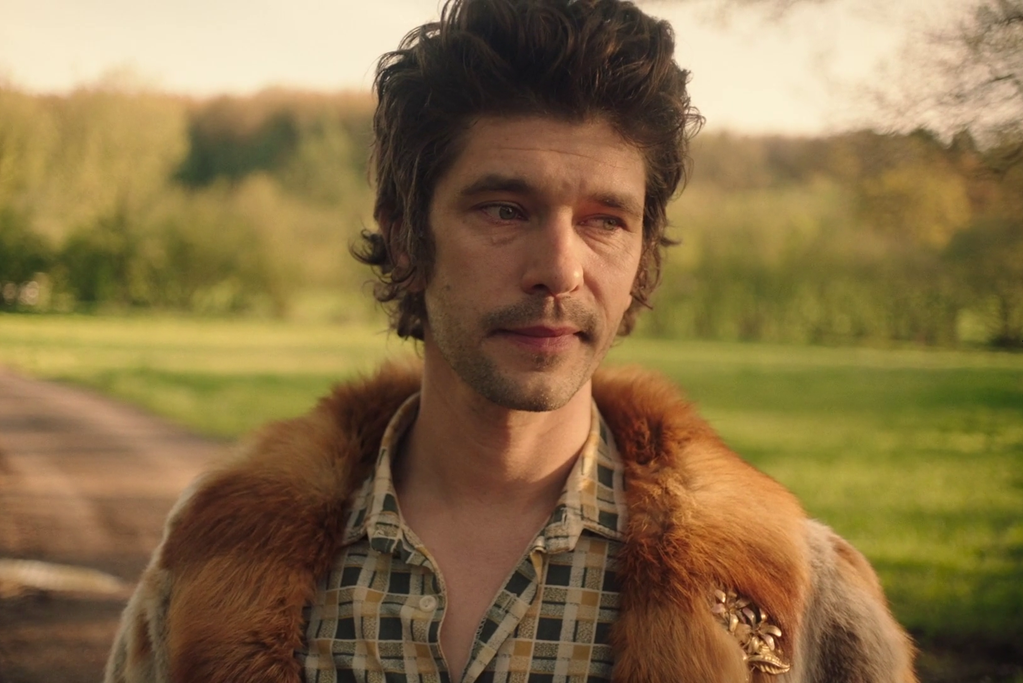
âGood Boyâ Examines Love both in Unhealthy Relationships and in Grief
Out of money and out of luck, Danny sets his eyes on this robbery to turn his life around. Apparently, though, his dynamic with Mum indicates an overbearing relationship that has dictated the young manâs life for as long as he could remember.Â
This is where Stuart makes a drastic shift in tone by the time Danny suffers from an apparent emotional breakdown. Inspired by the writer-directorâs own experience of bereavement, âGood Boyâ banks on the performances of its leads to tell a profoundly personal film. Whishaw proves how terrific an actor he is, regardless of the filmâs scope. And with Bailey as the anarchic mum, we see an unhealthy relationship that overdoses on platitudes and âgood boyâ remarks, we begin to understand how someone can stay that long in a toxic setup.
However, what makes Danny rethink his life are a handful of people from his past bizarrely appearing out of nowhere, the dying bird (now lying in the passenger seat), and a chance encounter with a storekeeper who invites for some gnocchi. Itâs now up to Danny if he should allow his passivism to continue its dominion over him, or stand up to it and take the chance to begin anew.
A Directorial Effort Underscored by Emotional Restraint
Proudly endorsed by Bristol-based grief charity Let’s Talk About Loss, âGood Boyâ marks the directorial debut of Tom Stuart, whose previous credits include working with Gia Coppola to co-write the screenplay of the latterâs film âMainstream.âÂ
Whatâs interesting for me, ultimately, concerns the dichotomy of these two Stuart-penned works. Whereas Coppolaâs film featured an unrelenting hyperactivity with its social commentary, Stuartâs âGood Boyâ is an exercise in directorial restraint. With a brisk 15-minute runtime, the short film progresses like a rolodex of emotions. Among other things, it tackles the subtle malleability of grief; along with the unexpected ways that such griefâif left uncheckedâcan assert itself in oneâs everyday life.
More importantly, it examines the overarching themes of accepting and embracing pain, and eschewing holding on to the past in order not to miss out on something new.





