“The Woman Who Ran” is available to watch on Netflix, Prime Video, and most other streaming platforms. Â
Hong Sang-sooâs most recent film, âThe Woman Who Ranâ (“Domangchin yeoja,” original title), is a cunning while grounded drama that has scoured subtlety and an ode to conversations, albeit uneventful, forgetful, and unvarying.
Korean art-house darling Hong Sang-soo, is a director with a great work ethic. Since the late 2000s, he has made a film every single year. There is even an occasion in which he made three in the same year, as when he directed âOn the Beach at Night Alone,â âClaireâs Camera,â and âThe Day Afterâ all in 2017. He is known for his meditative demeanor and drawn-out heart-to-heart pieces. His films are intimate dramas that focus on grounded characters and conversations while being crafty, cunning, and sharp.
Sang-soo strives through subtlety and simplicity; but he is often unfairly called out as “making the same movie over and over again” by delusive people. Sang-soo films his movies similarly, without much moving nor cuts, and center around characters dealing with different dilemmas. There is the occasion in which those dilemmas are of an erotic complexion or essence, but it is on a slight magnitude that does not force itself to exaggeration. Now, Sang-soo reunites with his current muse, Kim Min-hee, to bring his second picture of the year, âThe Woman Who Ran.â
Gam-hee (Kim Min-hee), a middle-aged married woman, visits three friends on the outskirts of Seoul to reflect on her life choices while her husband is away on business for a few days. The first one is Youngsoon (Seo Young-Hwa), a divorced woman who has given up meat and gardens in her backyard. Second is Suyoung (Song Seon-mi), a woman who has a crush on her neighbor but is being bothered by a young poet she met at a bar once. Finally, we have Woojin (Kim Saebyuk). She works at a movie theater and their meeting is the strongest of them all. It starts at weary, and they talk about their past relationship.

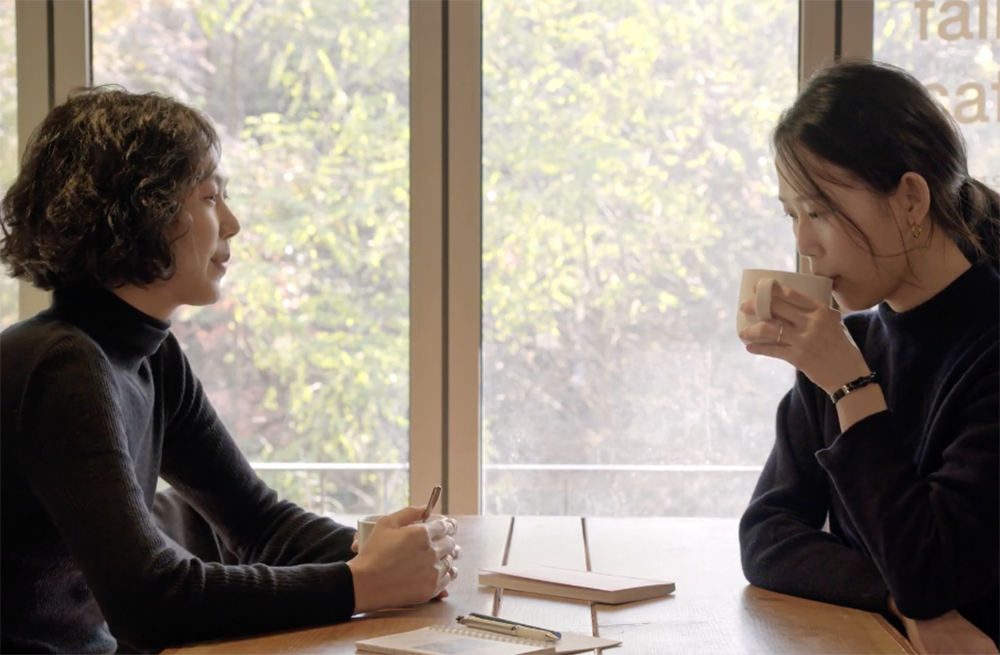
Sang-soo divides âThe Woman who Ranâ into three separate segments; each segment is one of the different meetings Gam-hee has with her friends as they talk about disconnecting stories in their past relationships. The first two go smoothly, except the moment in which a third-party interrupts and things go a bit south.Â
When the third conversation with Woojin arrives, this is when the film starts exploring its themes deeply. Itâs mainly focusing on male self-interest and conceit; however, it is from a woman’s perspective slowly beginning to acknowledge herself and the mental intricacies of her sex. These encounters that Gam-hee has with her friends help shape an image of herself.
The performances are realistic while slight and honest; it may not seem like they are doing much, but delivering these true-to-life roles is harder than it looks. The cast acts in a vérité fashion while having natural conversations with each other. Most of his Sang-sooâs films have performances like that and do not depend on big dramatic moments to elevate the scenes. It is all about the grins, laughs, winces, scowls, etc. Those are the key factors that can quickly convince the viewer from the ambient experience that he is presenting; in this case, it helps to define deeper feelings and mold relatable characters.

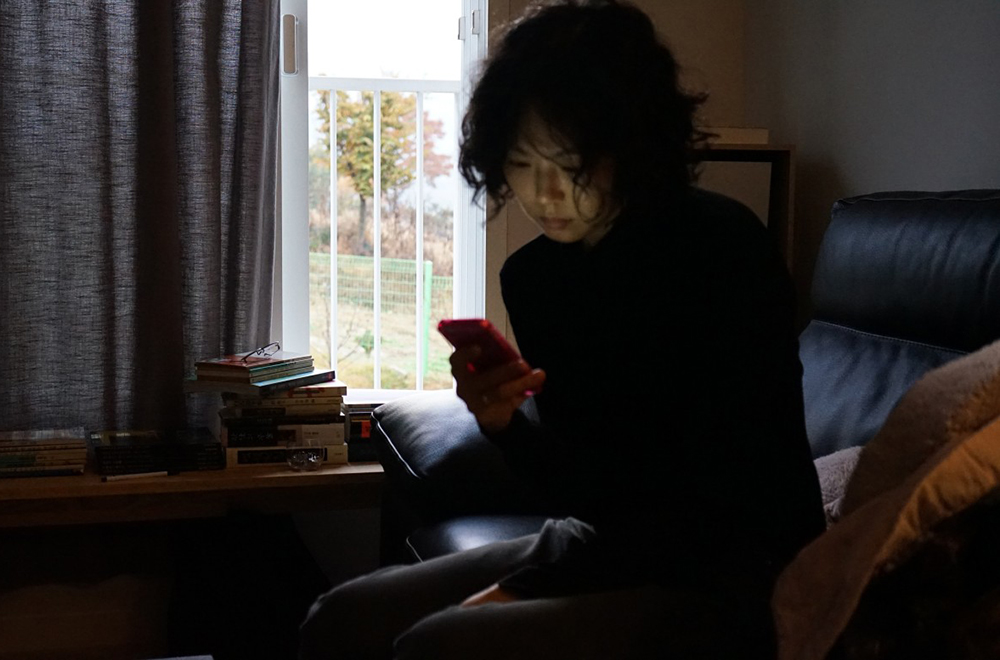
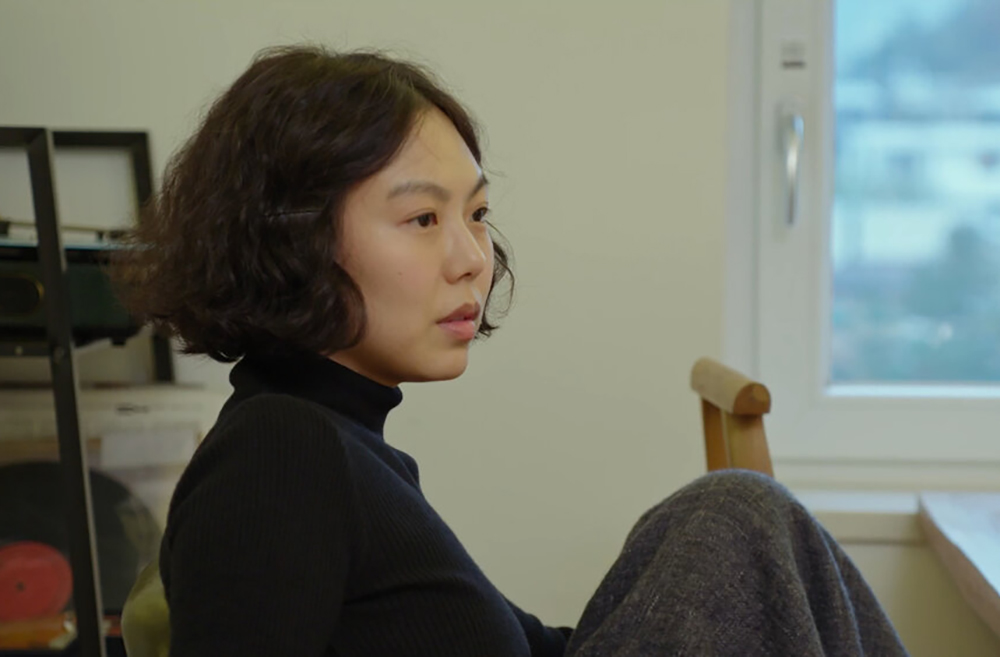
Although Kim Min-hee delivers a good performance, the film does not explore her character acutely. Her character is not as vivid, distinguishing, or prominent as some of the films she has been in, most especially âOn the Beach at Night Alone.â When you look at it on the other side of things, it slightly works. Gam-hee is conflicted with herself and the life she has lived; putting her as more of a listener than a talker makes her question what she is hearing. You can  see this magnificently in her facial expressions.
Overall, “The Woman Who Ranâ is not inventive or creative; Hong Sang-soo sticks to his strengths, styles, and techniques as he delivers a quick 80-minute film about being within complete splits with yourself and trying to find meaning behind a relationship. It is not the strongest film in his filmography, it is quite straightforward and uneventful. You find yourself looking for more when the credits roll, but the film does not deliver; there is not enough punch or vigor.
âOn the Beach at Night Aloneâ and âRight Now, Wrong Thenâ (2015) had an impact on how honesty can be dark and dreary while the film itself was quiet and uncomplicated. They pulled you in even though it had something going for it after it ended. It got stuck in your head and you thought about it afterward. Unfortunately, âThe Woman Who Ranâ does not have that. It has great exploration in its topics, and it is admirable how they can reach the core of it with pure conversations, but it lacks the emphasis on silent reverberations and portraits of human reactions that some of his other films have.