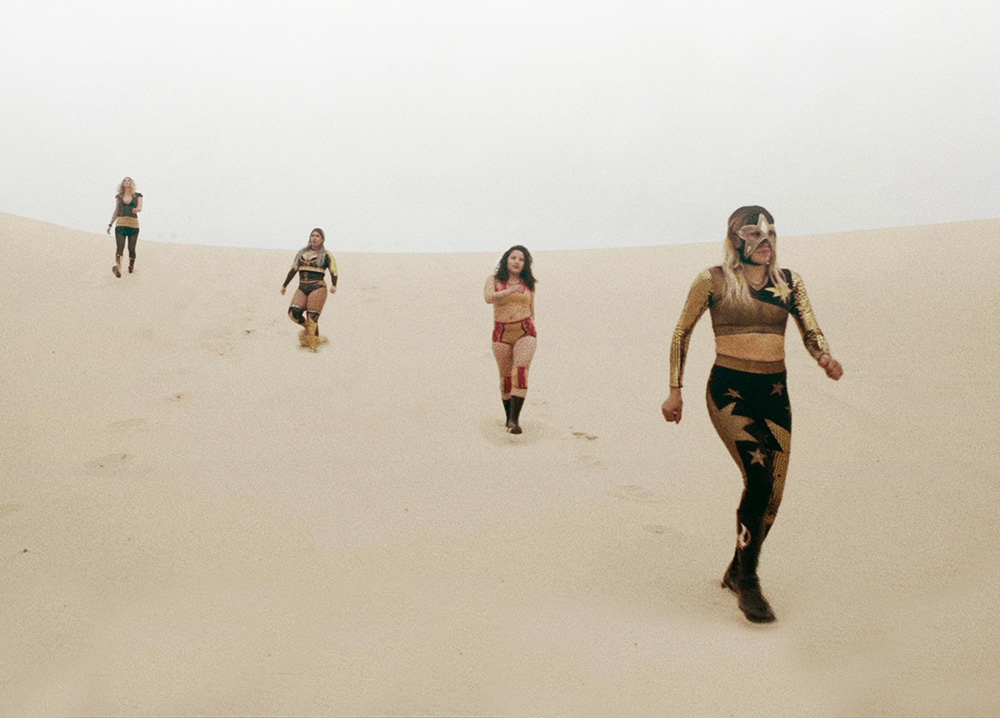
During a recent influx in wrestling filmsâthink the Dwayne Johnson produced âFighting with My Family” or the David Arquette documentary âYou Cannot Kill David Arquetteâ which also featured Mexican wrestlingâPaola Calvo and Patrick Jasimâs Spanish-language documentary âLuchadoras” throws its name into the ring of those strong outings.Â
The film, featured in the Global screening section at this yearâs SXSW festival, is set in Ciudad Juárez in Mexico and follows three female Lucha Libre wrestlersâLady Candy, Baby Star and Mini Serenitaâand these women are the filmâs titular Luchadoras, female Mexican wrestlers.Â
âLuchadoras” is a universal film for two reasons. Firstly, sport is such a universal inspiration thatâs exciting to root for, and the energy put on display during these matches is contagious. Thatâs our angle in here, as the second reason this is universal is the filmâs important social issues these characters bring to life. We learn this is an incredibly dangerous city for women.
It helps shed light on the integral problem within this community that women are the ones being hurt during the cityâs drug wars with each growing femicide. The reasons are not always crystal clear; but the issues are there. Itâs universal because each country has fundamental problems akin to this where women are failed; we just see it focused solely on Ciudad Juárez and these womenâs experiences where they just try to survive. Their opportunities are limited, made more interesting with the contrast that Ciudad Juárez is only a 24-minute drive from El Paso, Texas.Â

A man protagonist, Lady Candy, a funeral parlour worker by day, often stares at the large fence separating them and El Paso. These staring sessions are more poignant since her abusive ex-husband took their daughters to Texas with him and Candy hasnât seen them for months. He hasnât been returning her calls and sheâs fighting to get an American Visa to try to pursue legal action.Â
Baby Starâs our second subject, a young mother who dreams of fighting back in Mexico City. In the meantime, she tag-teams here with her younger sister Little Star as part of a Lucho Libre family. Sheâs a role model to her sister as well as her daughter, and those scenes are great hereâand one scene where she assures her sister that whatever she does, theyâll be there for her, is a great moment.Â
As well, itâs fascinating to learn the reason why Baby is always wearing a mask, during her fights and in her private life, for the purposes of this film. Without it, she would feel ashamed. Establishing these feelings regarding her mask is integral as, when another fighter rips off her mask, as well as her sisterâs, we can feel their shame as they try to hide their faces. We never see her face in the film and donât know her real name, and the same can be said for Candyâbut we still get to know and relate to these people because their Luchadora alter-egos are an integral part of their lives and their identities. The direction and writing by Paola Calvo and Patrick Jasim makes this evident.Â
The third subject of the film, Mini Serenita, aptly named for her short stature, is just as likable as the other two subjects. Sheâs from a different walk-of-life as a Luchadora closer to 40 (Baby and Candy are in their 20s), and Mini is a factory worker who has found the sport and learned she can make a better wage fighting. Her role as factory worker is intricate to the social issues as female factory workers are largely affected. In fact, the film opens with a story of a bus full of female factory workers being brought to the middle of the desert and being killed. It feels something of urban legend; but appears true.Â
That aspect is important, but itâs a confusing scene to throw us into. The documentary takes about 10 minutes to find its bearings and I think it would have been helpful to introduce the subjectâs names as soon as we meet them, even just a subtitle saying theyâre Lady Candy or Baby Star. That could just be a style choice not to go against the structure of the documentary to have that header, as there arenât any talking heads here. This is an observational, fly-on-the-wall doc observing the wrestling and social issues.
These characters smile through it all and it gives this film so many layers, with the contrast between the beauty of these women and characters and the ugliness within this city.”
With the violence they face, thereâs one moment that stands out as humour is used as a coping mechanism. Candy shares a conversation with neighbours as they see that someone has been shot and killed in the street, and his body is uncovered. They wonder who is the one who needs to supply the sheet that covers these bodies, and why that sheet is always white. Itâs entertaining but heartbreaking and confounding that they can talk so casually about something like this. In Canada, Iâd be shocked to see something like this on the street; in Juárez Ciadad, itâs just another Tuesday.
When the film does find its footing early on and focuses on the titular luchadoras, itâs impressive, especially because of scenes like that one. These characters smile through it all and it gives this film so many layers, with the contrast between the beauty of these women and characters and the ugliness within this city.Â
Itâs neat, too, how all their distinct storylines fit neatly and coherently together as they go through their individual struggles. These subjects donât always interact with each other, nor do they seem close enough to be best friends. When their stories collide, it feels like a superhero cross-over event because they do feel like superheroes; both in alter ego and them being strong role models. They have their unique struggles, but at the end of the day theyâre connected by community and by their love of Lucha Libre. Thatâs why âLuchadoras” inspires.Â
âLuchadorasâ has its world premiere at South by Southwest (SXSW) on March 17th at 1 PM CST in the Global programme. It will be available through March 20th.