Hereâs why most romantic-comedy films are forgettable by the time the audience leaves the theater or closes the movie player on their devices: these movies use a host of conflicts right at the start of the relationship between their lead characters to serve as plot device to raise the stakes. They hope that the emotional payoff would resonate well with the viewers, despite the fact that such lazy writing has been done over and over again.
To find a place in the audiencesâ consciousness, a rom-com must present either a novel approach for its storyline, or really cheap fodder for a plot line.
Jason Winerâs 2019 film, âOde to Joy,â gingerly vacillates between the two territories, fortunately ending its tightrope walk on solid footing despite teetering on the brink of being offensive most of the way.
A Film that Tries to Shed Light on an Unpredictable DisorderÂ

âOde to Joyâ opens with a couple of title cards to explain a neurological disorder called cataplexy, which causes sudden attacks of muscle weakness and is typically triggered by strong emotions such as anger, surprise, and fear. The film then takes us to a wedding ceremony, wherein we see one of the brideâs brothers, Charlie (Martin Freeman), seemingly behaving like a curmudgeon. The other brother, Cooper (Jake Lacy), continues to keep Charlie in check lest he faints.
The disorder introduced at the start? Charlie suffers from it; and in his case, his cataplexy is triggered when he feels joy. So itâs no surprise when, upon seeing his sister happy getting married, he passes out and wakes up long after the wedding is over.Â
To get by this dangerous condition, Charlie gets all the help from his brother and friends from work, constantly providing him with depressing news and anecdotes (famine in Darfur, war in Syria, measles outbreak) to counter all the joy-inducing things he sees every day (a service dog, kid on dadâs shoulders, random act of kindness).
But thereâs one joyful thing that always finds its way, no matter how hard someone tries to block it: love.
That manifestation of love appears in the form of a spirited woman, Francesca (Morena Baccarin), whom Charlie meets at the library where he works. Against his better judgment and due to the prodding of his friends, he tries to ask her out. We all know how the date turns out, and after telling her of his cataplexy, Charlie decides to end things after the first date. However, realizing he has fallen for Francesca, Charlie sets her up with his brother Cooper instead, in essence to keep seeing her even at armâs length.
The Fatal Mistake of Using a Medical Condition as Comic Relief

Understandably, films with comedic elements that tackle serious illnesses would feature a few funny scenes, in their own way to familiarize the audience with the everyday struggles of people suffering from the said disorders.Â
But to dwell on them too much? That would be borderline offensive.Â
Based on a true story by Chris Higgins that originally aired on âThis American Life,â âOde to Joyâ seemed more interested in showing the lighter side of cataplexy instead of dealing with the condition head-on. And while thereâs nothing wrong with it given the rom-com genre, thereâs something almost criminal with using a serious condition as comic relief to the point that it takes particular interest in documenting Charlieâs everyday struggles to slapstick levels.
And while âOde to Joyâ might be inspired by a real person, the screen adaptation itself feels somewhat clunky. The filmmakersâ use of cataplexy might aim to raise awareness, but their execution makes it feel like itâs merely a plot device to drive the story forward. For instance, the film focuses more on Charlieâs obsession to keep Francesca seeing Cooper, clearly to serve his selfish interests. His cataplexy wasnât given enough screen time to be further examined, with director Winer even devoting a few scenes to Francescaâs aunt whoâs suffering from cancer.
So yes, while itâs understandably a comedic film, itâs also understandable if the film sends the wrong message to the audience. Cataplexy isnât fun at all, and yet something out of the film nudges us that it could be.
Despite Flaws, âOde to Joyâ Urges the Spirit to Go Liveâand Not Merely ExistÂ
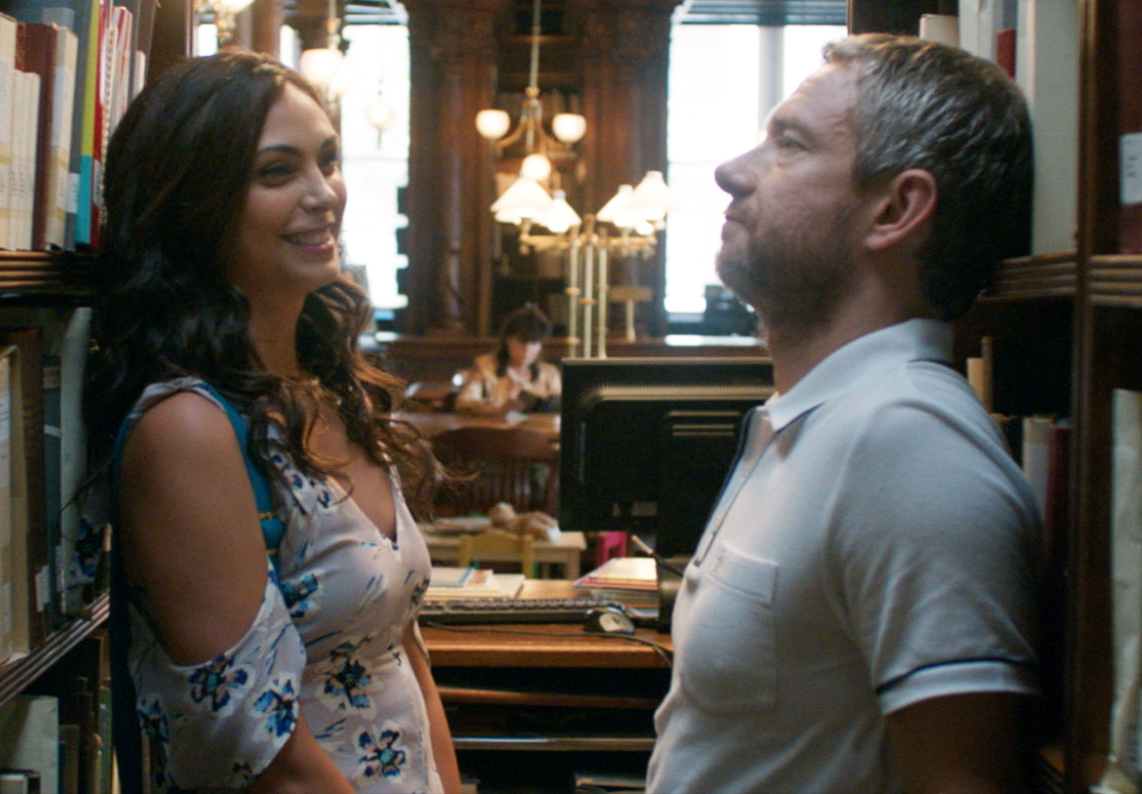
While for the most part âOde to Joyâ struggles to be funny and affective at the same time, it nonetheless succeeds in showing the realities of someone with such disorder: from the outside looking in, this is a movie about a man warding off real connections to remain in his comfort zone. I mean, hereâs a man who jogs to work listening to Wagnerâs âSiegfriedâs Funeral March,â works at the public libraryâa place vivacious people might refer to as boring or even joylessâand puts tacks in his shoes to step on and induce pain before any modicum of happiness kicks in.
Charlie might be surviving by refusing to entertain happy thoughts and memories, but in doing so he isnât actually living. And Freeman portrays the solitude of a man who has long given up on love and happiness just to exist to near perfection. Sure, Charlieâs cataplexy renders him unable to experience the joys of livingâbut is it really because of his condition, or is he simply using it to run away from lifeâs challenges?
Earnest in its efforts to blend its bleak subject matter with sweetness and quirkâoftentimes to a fault, âOde to Joyâ might be one of the more unusual entries in the âpredictableâ romantic-comedy genre. But with Martin Freeman and Morena Baccarin perfectly cast and believable in their roles, âforgettableâ the film is definitely not.Â
Andâif you havenât realized the connection until nowâyouâll never listen to Beethovenâs âSymphony No. 9â the same way again.