A foreboding voiceover. Cut to a woman slowly entering a house, looking the camera dead in the eye, and delivering an internal monologue that ends with, âMy name is Lily Saylor. I am a hospice nurse. Three days ago, I turned 28 years old. I will never be 29 years old.â
The Netflix original horror film âI Am the Pretty Thing that Lives in the Houseâ kicks things off with what might be the most unnerving opening scene in recent memory. The movie manages to be chilling despite the fact that it gives up its punchline just a few minutes in â we will see our leading lady Lily (Ruth Wilson) die. Writer and director Osgood Perkins, son of famed âPsychoâ actor Anthony Perkins, makes a bold choice with that decision. But it ultimately pays off.
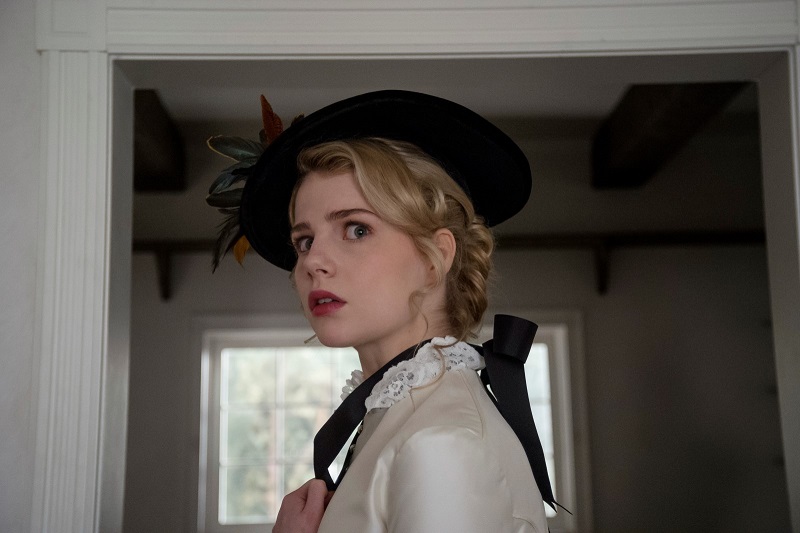
âI Am the Pretty Thing that Lives in the Houseâ is a good old-fashioned ghost story. Wilsonâs Lily is a hospice nurse to famous retired horror author Iris Blume (Paula Prentiss). Irisâ most famous book tells the story of a young woman named Polly (Lucy Boynton) who was murdered on the day of her wedding. Over the year she spends in the house, Lily begins to wonder if Polly was, in fact, a real person murdered in the house.
âI Am the Pretty Thing that Lives in the Houseâ works with a simple story, but itâs paired with a healthy dose of dread. The film is told exclusively through Lilyâs eyes. And as she slowly starts to suspect something supernatural might lurk in the house, Perkins delivers an increasingly uneasy feeling to the audience. A phone cord slowly becomes tauter until it snaps out of Lilyâs hands. The camera slowly creeps around the corner as Lily slowly approaches. By the time the film reaches its climax, the tension is nearly unbearable.
On occasion, the film over utilizes exposition and artsy camera angles, and underutilizes its leading ladies. Wilson has her fair share of beautifully written monologues that sound almost Victorian. But theyâre often voiceover. Wilson delivers these multiple monologues well, but her character feels vastly under-developed. The house often feels like more of a main character than Lily does.
Second-tier characters Iris and Polly have more layers to them than Lily does. Without diving too deeply into spoilers, itâs a shame Iris and Polly did not interact more, as there were plenty of chances to have Iris and Polly interact. But instead, the women often act independent of one another. All three often do. This feels like a missed opportunity.
These setbacks, though, are minor. âI Am the Pretty Thing that Lives in the Houseâ is a stylish slow-burn thriller thatâs worth your attention.