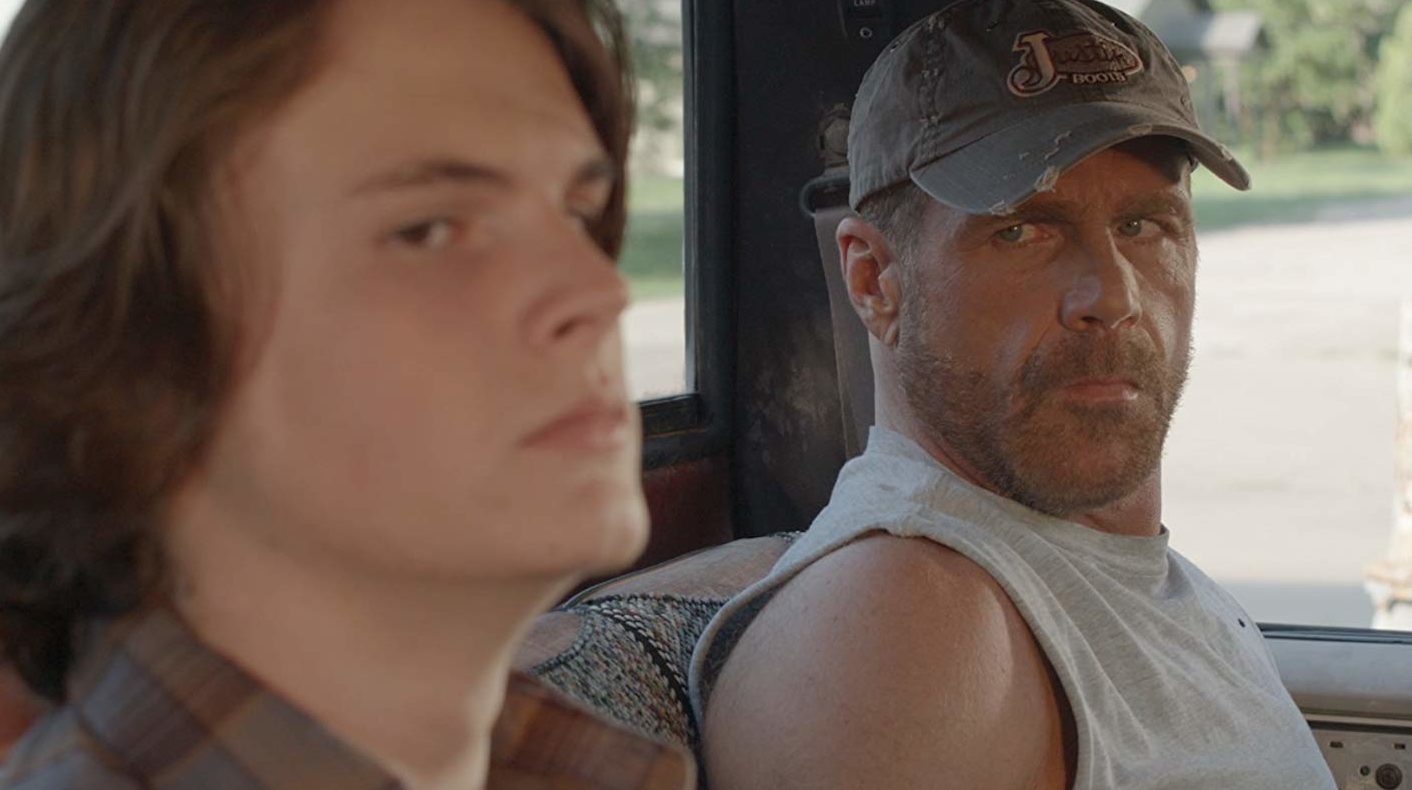
With â90 Feet From Home,â Brett Bentman has produced a stark and powerful vision of childhood abuse and family trauma that lasts the ages. For an independent film the movie is produced well, featuring both a top notch production value and acting package, starring such talent as WWE star Shawn Michaels and Dean Cain from âLois and Clarkâ fame. The film follows a pair of brothers from early adolescence into adulthood; and, nestled in the heart of Texas, shows deep, painful wounds that time alone is ill-equipped to heal.Â
James Devine is a tough man to play, but, under Michaelâs performance, becomes someone we initially hate, then loath, and ultimately feel sorry for. Itâs a credit not only to his portrayal, but the script, written by director Bentman and co-writer Scott Davis, which features some of the best dialogue Iâve seen in an indie, ever. To give you an idea of the kind of father Devine is to his children, his one son, Scott (Chase Pollock as a teenager, Adam Hampton as an adult) is a teenage MLB hopeful whose arm catches the eye of local scouts, who offer him a solid package. Devine doesnât think he should play baseball, sneaks into his room one night, and breaks Scottâs arm with a baseball bat. Abuse runs deep in this family; no one blinks an eye, not his brother Tommy, not his mother. This is not an isolated incident, but one that lines years of abuse that Devine would put Scott through.Â
To Bentmanâs credit, the characters in the film are developed fully, and the actors chosen for the roles couldnât be better. Hampton is perfect as adult Scott, and carries with him a palpable pain that lines not just his demeanor, but his actions and personality. He meets a young boy on his old baseball field who reminds him of himself. The boy has an abusive father who, like Scottâs, tells him heâll amount to nothing, and a piece of baseball equipment he needs to improve his game is âa waste of money.â He calls him fat and useless.Â
Bentman is a gifted director; his crowning achievement with â90 Feet From Homeâ is to make you feel uncomfortable. This is a difficult movie to get through, both for its abuse and its ramifications. Scott, washed out of the MLB after a biceps injury, means to kill his father. It sets up a tone that we feel as painful to us as it feels to Scott. The whole thing rests heavily on Hamptonâs shoulders and he delivers. I canât imagine another actor playing Scott. He imbues him with a deep hatred of his father and resentment that we feel singularly.Â

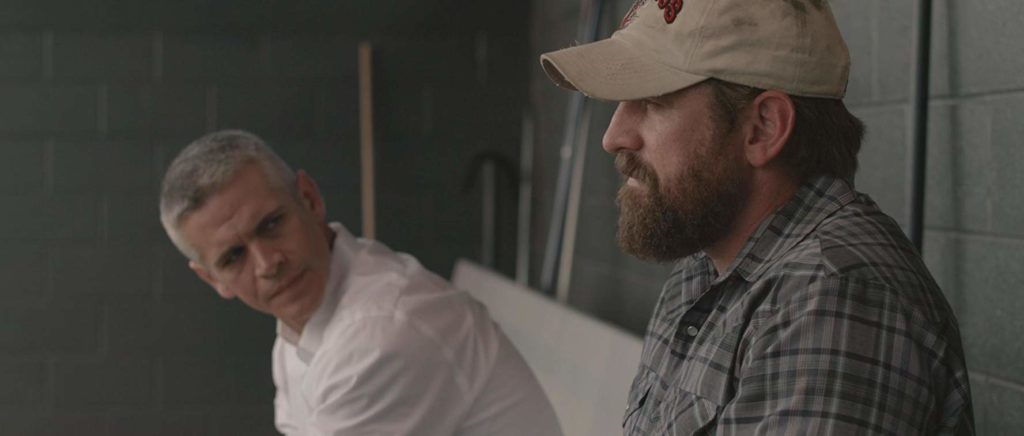
The rest of the players do a good job as well. I donât follow the wrestling circuit, nor know what kind of personality Michaels brings to that arena, but here he performs more than apt, making us believe his transformation from abusive stepfather to a quasi-reformed yet guilt-ridden drunk that knows that no matter what he does he canât make up for his transgressions towards his wife and children during his earlier years. We learn heâs sick, and we learn that Scott doesnât care. But Michaels makes us believe heâs truly sorry for what heâs done, just as he makes us feel deeply that heâll never be forgiven. Michaels has depth, range, and, somehow manages to garner sympathy for his character when there ought to be none.Â
Thom Hallum, who plays Scottâs brother Tommy, is another wonderful addition to this film, and does a good job as a cop and family man that is a polar opposite to the kind of upbringing he underwent under Devineâs fatherhood. While he wasnât a victim of abuse as was Scott, we see he was affected similarly. One scene where Devine abuses Scott in his bedroom late at night is even more effective as Tommy turns his head not to watch. âIâm sorry he picked you,â he tells Scott and we feel his sadness and exasperation with the situation. His wife, played by Laura Menzie is loving but not as fleshed out as Devine, Scott, or Tommy, but, luckily, this doesnât take away from the film overall.Â
If I have one criticism of the film, itâs that a couple of action-type, dramatic elements work their way into the production during its third act. But, to my surprise, Bentman resolves these with simple finality instead of going for the emotional jugular. The filmâs final shot, which will not be spoiled here, shows a dejected man coming to terms with a lifetime of pain and suffering, with a pan out and musical score that add to the film in remarkable ways.
All in all, â90 Feet From Home is an achievement of directing, acting, and emotion. Itâs indie through and through. Itâs slated for a June release, and if you get the chance to see it, you shouldnât pass up the opportunity. As the film closes you really feel like you lived Scott and Tommyâs story; itâs hard to find fault with that.Â