In âSouthpaw,â Jake Gyllenhaal plays a down-on-his-luck boxer; and while that formula may seem overused, in this film, given the circumstances, it somehow seems fresh. The film is directed by Antoine Fuqua, director of movies like âShooterâ and âTraining Dayâ and has a gritty, desperate feel compared to boxing films like âAliâ and âCinderella Man.â The film won three film festival awards and was nominated for 7 more. And while it lacks the momentum and high peaks of some other boxing films, it makes up for it in force, brute violence, and a different type of rise and fall story than we are used to seeing.
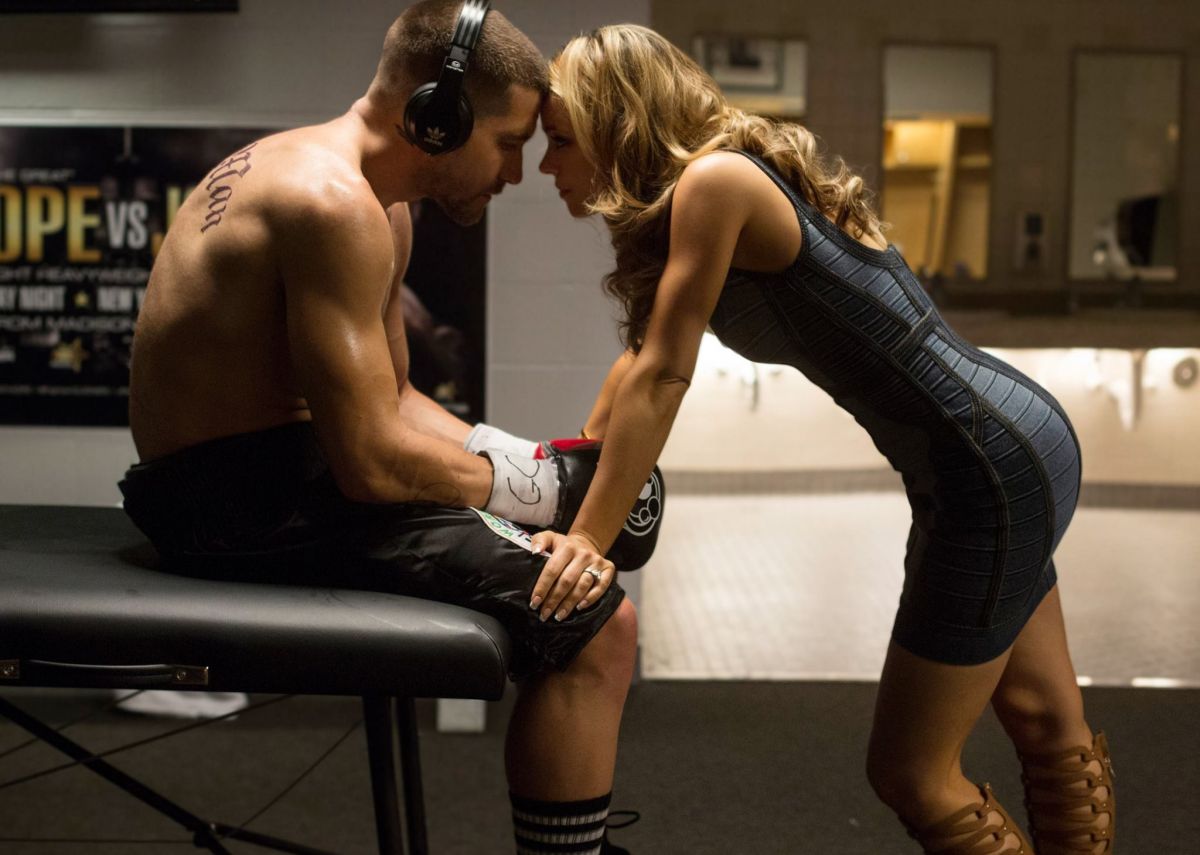
At the beginning of the film we are introduced to a brash fighter named Billy Hope. He listens to rock music while assistants tape up his arms. He takes the words of caution from his wife, Maureen (Rachel McAdams) to not get hit too much off the cuff, dedicated to winning at any cost. Billy fights harder the more he gets hit, a phenomenon that concerns his wife, and especially his daughter, who isnât allowed to watch Billyâs fights as theyâre âtoo violent.â But the beginning of the film paints a full picture of the Hope family – just the three of them, they have it all: money, friends, the American dream.
In a protracted scene of desperation, however, Billy loses it all. His wife killed in a tragic accident, Billy loses his daughter to the system, and spirals out of control with anger, violence, drugs, and blackouts. Billy grew up in the system, in and out of shelters, and has that street edge that makes him both a fierce contender and a loose cannon. Fuqua and Gyllenhaal paint Billyâs rise and fall carefully and fully, with nothing left to the imagination.

âSouthpawâ is a unique boxing picture, as most of the film is aimed at explaining Billy and his actions, not focused so much on the four corners of a boxing ring but rather the human spirit. We see Billy pull a gun to a friendâs head when he mentions his late wife, and focus on revenge for his wifeâs death more than his fatherly duties. At times Hope is a hard guy to root for, but âSouthpawâ makes us want to. Itâs this, and its gritty, raw emotion that make it a powerful picture throughout.
Fuqua and cinematographer Mauro Fiore highlight this grittiness well, in scenes that shift from Hopeâs stately home outside of Manhattan to the mean streets of NYC. The entire film is cast in a perpetual grey pallor, a world without sun, the bright lights reserved for late night fights in different venues. Fiore also films âSouthpawâ in an erratic style; not as chaotic and cutting as Michael Bayâs infamous âTransformersâ series, but in a way that makes punches during fights tough to focus on, the action blurry and fierce.
But, for a boxing film, âSouthpaw’sâ main focus isnât the boxing, and takes great lengths to fully detail its main characters. Gyllenhaal, as usual, brings terrific acting chops to the role, and completely disappears into the character. With âPrisoners,â âNightcrawler,â and now this, Gyllenhaal has cemented himself as an actor to be reckoned with. He makes you feel Hopeâs aggression, his ups and downs, his pain.
Alongside him, a bevy of solid acting ads to an already engaging picture. As his wife Maureen, in her limited screen-time Rachel McAdams turns in a great performance, not a composite of other roles sheâs played, but her own unique entity. Sheâs Billyâs greatest confidant and ally, once warning that the others in his life will scatter when the chips are down; it isnât until this prophecy comes true that we see how much she cared for and meant to him. Ancillary characters, such as Naomie Harris and Curtis â50 Centâ Jackson, round out the cast.


At the end of the day, viewers are unlikely to find much new about âSouthpaw.â It follows a standard boxing picture formula, and is fairly predictable even if it finishes strong. But itâs the emotion âSouthpawâ adds between the boxing matches that makes it a unique film. By the end, you know exactly what Billy Hope is fighting for. In a genre crowded with films centered on the boxing match, itâs a welcome change.