





It often takes directors without anything to prove to make a statement. Weâve seen this with films written and directed by the same person, such as the late Bill Paxtonâs excellent âFrailty.â With the 2009 effort âMr. Nobody,â written and directed by Jaco Van Dormael, we find a film that blends fantasy and reality, and one that touches on some of the unspoken emotions of the human heart. Regrettably, a disjointed and slow pace that would have been overlong at 1 hour and 30 minutes becomes cumbersome at 2 hours and 20; but those who stay with it will find introspection and food for thought – or at the very least a unique filmgoing experience.Â
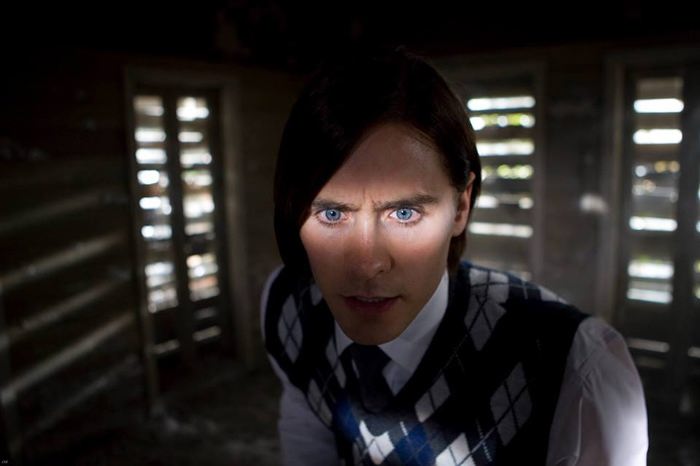
Jared Leto leads the cast of this mostly indie film, and his penchant for off the cuff movies isnât lost within the confines of âMr. Nobody.â The plot here is hard to describe, as most of it is filmed as a dream jumping from place to place, but centers on a boy, named Nemo, played by a host of actors through different ages and faced with an impossible choice. His parents are separating and he must chose who he wants to live with. Unable to, he finds that anything is possible (Dormael shows us this in great detail) as long as he doesnât chose any one action.
âMr. Nobodyâ has sci-fi elements, and waxes and wanes from instances of Nemoâs youth to his placement in a hospital as a 118-year-old man nearing death. The facility Nemo resides in is labeled New New York Hospital, and the futuristic city that it inhabits is reminiscent of Coruscant in George Lucasâ âStar Warsâ prequels, with shining glass towers and pristinely clean interiors.
The whole backdrop of “Mr. Nobody” is interweaved with a common theme: a modern society where people no longer die, with Nemoâs impending death from old age televised and covered with interest. A journalist sneaks into his hospital room; it is from his discussions with the journalist that the events of the film – and of Nemoâs bizarre life – are shown to us.


We see outcomes of Nemoâs life had he made either choice (to stay with his mother or his father) occur as reality, and to be frank, a hefty suspension of disbelief is necessary to get through this work. We see such things as first loves of Nemo, and the lives of his mother and father throughout. But the events are filmed in a way akin to films like âEternal Sunshine of the Spotless Mind,â or Letoâs 2000 film âRequiem for a Dream.â âMr. Nobodyâ is not a film of chronology, but one of substance. Perhaps it is only through a film like this that events such as possible separations of teenage lovers are felt with pain and heartache within moments, where romantic dramas often take their entire run-time to make the same statement.
For a work set in the future, many of the film’s early events take place in what appears to be the â80s and are scored as such. Songs such as â99 Luftballoonsâ by Nena or âWhere is my Mind?â by Pixies (which scores one of the filmâs most joyous sequences) are present, sandwiched between classical music from artists like Erik Satie and I Fiamminghi. It often takes a good soundtrack to make a movie resonate and stay with you. And like the subtle use of a quiet piano on the emotional indie âLiveLove,â the soundtrack of âMr. Nobodyâ makes you feel the events of the movie as real emotions, not merely occurrences or plots.
The acting here is good, with Leto carrying adult Nemoâs scenes well, and somehow making us accept the filmâs bizarre occurrences throughout. Heâs backed by others who all do a good job as well such as Diane Krueger, Sarah Polley, Rhys Ifans, Juno Temple, and Clare stone. Daniel Mays, who plays the journalist, doesnât offer much but questions, but does well in a role designed without much depth.


Additionally, the filmâs chaotic and dreamlike style may lose some who are looking for a straightforward narrative. âMr. Nobodyâ is about emotion and introspection, not plot. if youâre a fan of movies such as âVanilla Skyâ or the aforementioned âEternal Sunshine of the Spotless Mindâ you will probably find easy footing here. But ultimately many filmgoers may be lost amidst a film produced for and by those with a lust for the bizarre and lots of patience.
– by Mark Ziobro


