





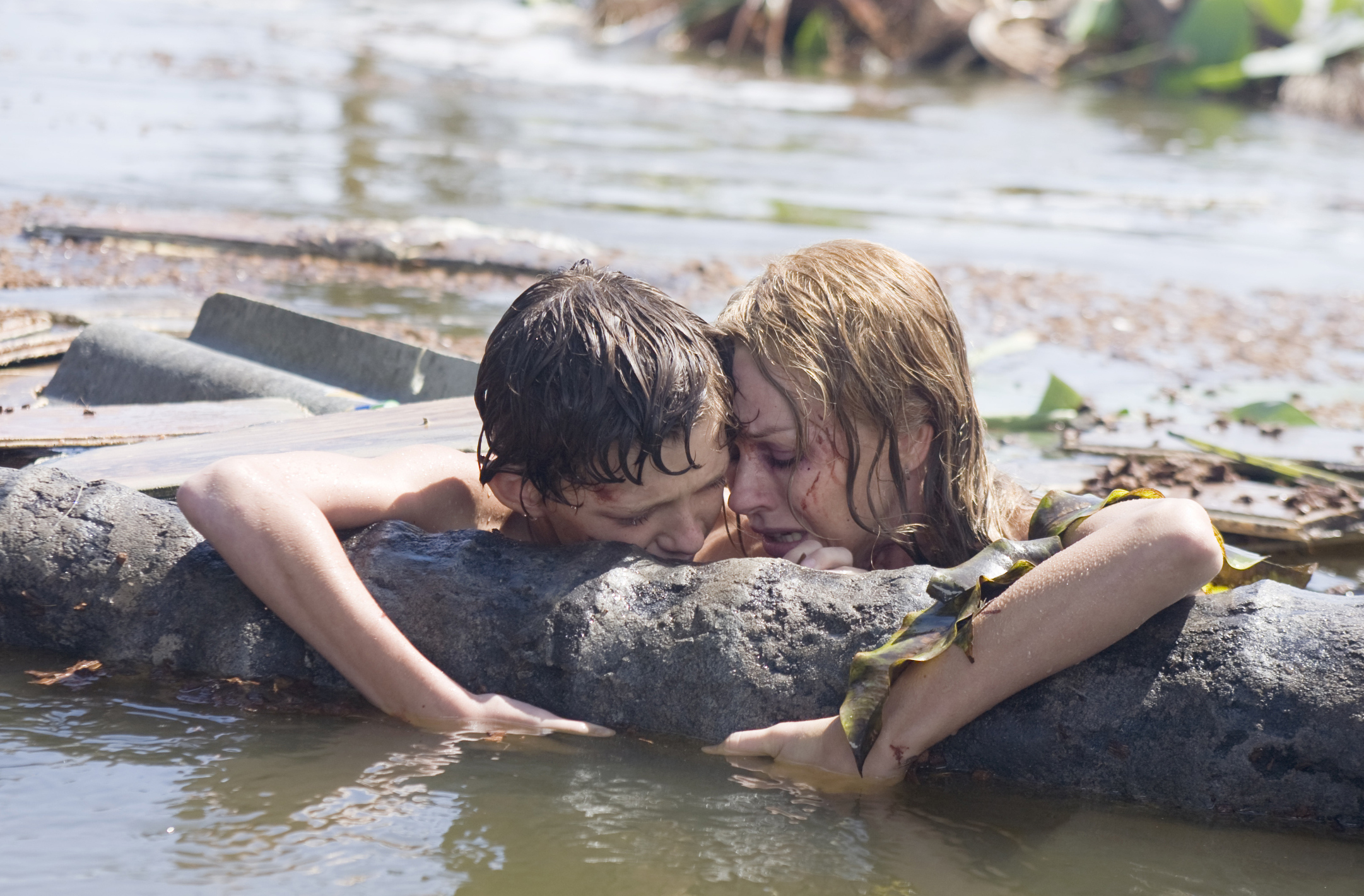
A true account of one familyâs story of survival during the tsunami that struck that Pacific Basin in the winter of 2004, âThe Impossibleâ is both gut wrenching and poignant. While many natural disaster/survival movies often personify disasters as their own purveyors of misfortune, âThe Impossibleâ does no such thing. Instead, it is a very human movie, a film that portrays everything from the point of view of its victims, its camera lingering uncomfortably. And when you think the camera will pull back, will have mercy, it instead continues to linger.Â
The film follows a tourist family, a couple and their three young sons who would survive the tsunami. The couple, played by Naomi Watts and Ewan McGregor couldnât be further from films like âThe Ringâ and âStar Warsâ that pushed along their careers. In this film they are hapless victims of a circumstance beyond their control. Their three sons, Lucas, Thomas, and Simon are swept up in it with them. The film is really broken up into three parts: the first, as Maria (Watts) and young Lucas (Tom Holland) fight for their lives, the second, as Lucas and his mother ride out the chaos of a makeshift hospital, and the third as husband Henry (McGregor) and his other two sons embark on a desperate quest to find their missing family.
Seeing as the family’s tale of survival is chronicled well in a simple Google search, this is not a spoiler, but helps to prepare you for what awaits these parties during the movieâs run.


We donât see that tsunami from the oceanâs point of view, heading in, either. A simple breeze, more strong than normal, and a steady rumbling precede it. The only time we see the wave is when it smashes into a hotel filled with guests, as they stand dumbfounded with nowhere to run. Itâs much more effective and frightening, and both Bayona and Cinematographer Oscar Faura highlight the material with the respect and ferocity  it deserves.
âThe Impossible,â smartly, doesnât decide to make its entire story about crashing waves, but about survival, and an often hopeless search to find loved ones. The proceedings are doubtless more authentic given that part of the filmâs writing credits are given to MarÃa Belón, whom Watts portrays, for giving her story. In the film sheâs a physician who is taking time off to raise the boys. But it’s her eldest, Lucas, who ends up taking care of her for a large portion the film. Maria sustains a few devastating wounds during the course of the film, and the movie doesnât shy away from making us, as well as Lucas, horrified to lay eyes on them.


All in all, âThe Impossibleâ is a powerful and moving film, though some proceedings towards the filmâs end drag on somewhat and add purposeful drama that didnât really need to be there. But itâs all forgivable. With excellent acting, mournful material, and hope sandwiched between tragedy, âThe Impossibleâ is a strong motion picture that adequately highlights a disaster and what people will do to survive it.
– by Mark Ziobro


