





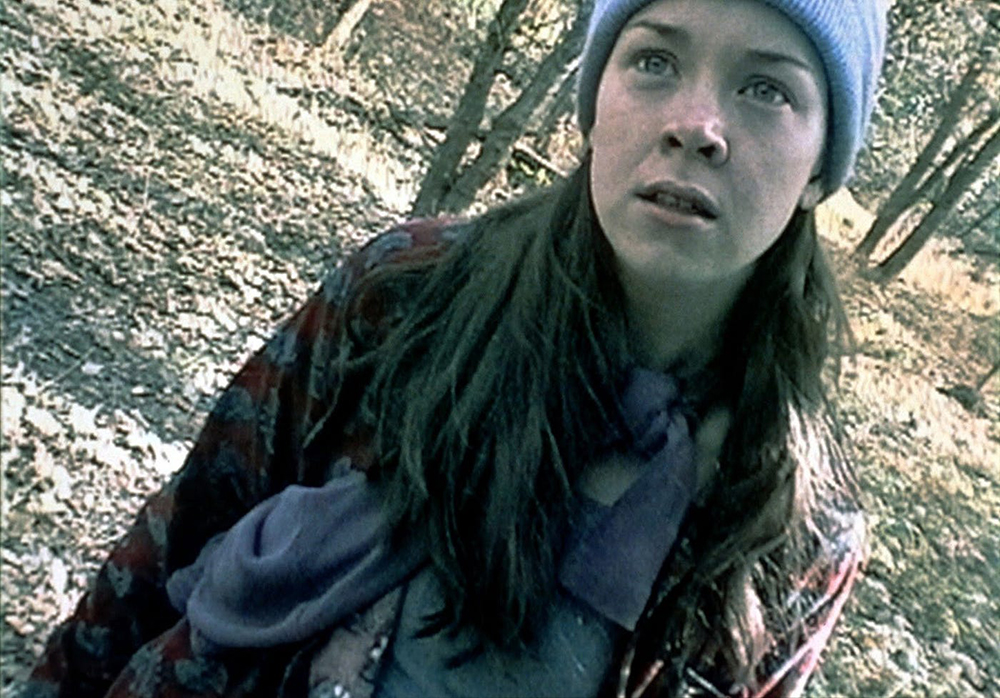
The âfound footageâ cinema tool has been usedâor in some cases, overusedâby a legion of filmmakers. Some use the tool as a gambit to make their pictures creepier or more authentic (âThe Texas Chainsaw Massacreâ), while others use it to make a movie more exciting, chaotic, or anxious (âCloverfieldâ). However, there is always a trendsetter in movie realms, andâfor many reasonsâthe seeming genesis of the found footage craze can be traced back to the 1999 film, “The Blair Witch Project.”
The best horror films draw upon not monsters or psychopathic killers, but upon something elemental, something that could indeed happen. The 1975 masterpiece âJawsâ showed this extremely well, terrifying us perhaps because we are afraid of a giant shark, but more because the ocean is so bigâand can be filled with so many deadly things we canât seeâwith âJawsââ shark one possible suggestion. It is in this vein that âThe Blair Witch Projectâ is so successful. It combines the fear of the known but terrifying prospect of being lost in the woods, with the fear of the unknown: a witch, a demon, or some kind evil being which supposedly inhabits the forest. While never seen, its legend is spread by locals who whisper its name in hushed voices out of fear.
Devoid of Score; a Documentary FeelÂ
âThe Blair Witch Projectâ is filmed as a documentary. Unlike most other found footage films, it doesnât say the film is based on real events, but promotes the movie as if it itself was a real event. The film features three college students who are making a documentary on The Blair Witch â Heather (played by Heather Donohue), Josh (played by Joshua Leonard), and Mike (played by Michael C. Williams). This blurs the lines between movie and reality, as the film reserves its casting info to the end, making it feel like a documentary and not a fiction film.
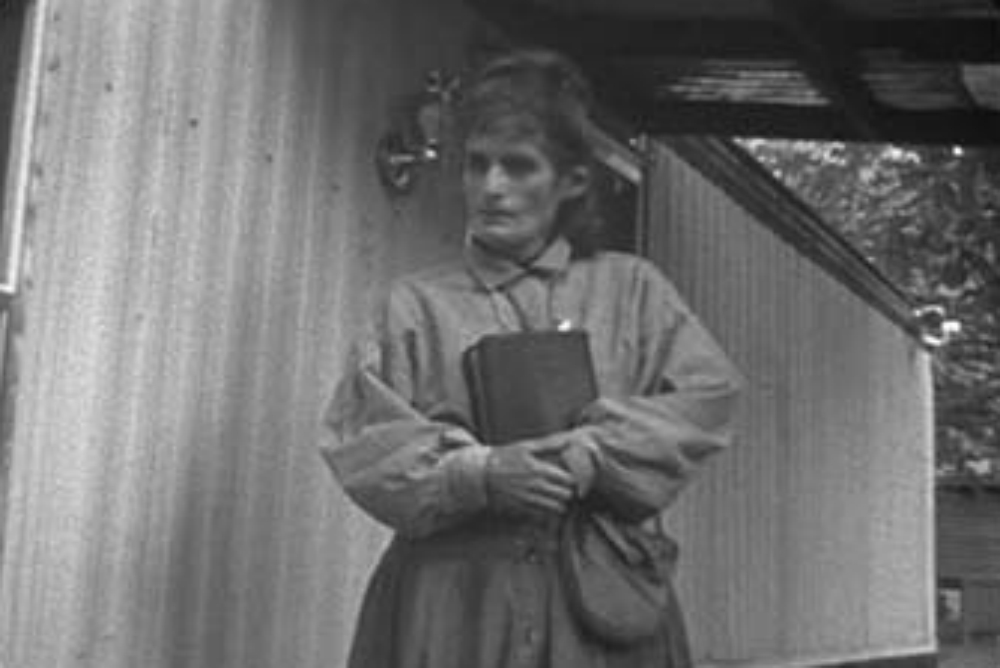
The movie also switches up its’ filming style between color and black & white. The color is used primarily for everyday things (when the three are simply walking along, exploring things, etc), and the black & white is used for purposeful filming events, such as when Heather films the history of Coffin Rock, where the Witch or some other killer committed an unspeakable deed on a number of townsfolk. The legend is further solidified by the legend of the Blair Witch, where children from the town were supposedly captured and murdered one by one, somewhere in the forest where the filmmakers now tread.
Lost in the Woods
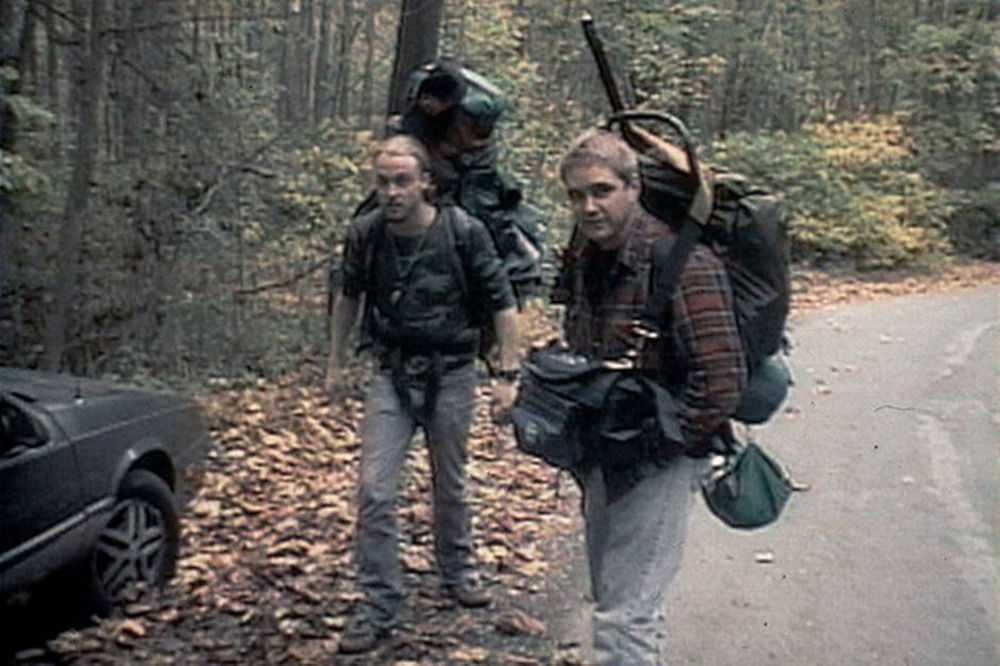
The fear of the movie is brought through the low budget filming style. It is also brought from the acting of Donohue, Leonard, and Williams, which becomes more and more realistic as tensions rise and emotions start to break down. As they walk through the forest, first filming, the woods are full of things that might scare us: noises we canât identify (once Josh swears he hears footsteps, and we, the audience, clearly hear leaves rustling and what appears to be a child crying). However, there are also things we canât explain. We see rock formations, as well as stick figures hanging from the trees; it makes the forest an eerie place which seems a lot bigger than initially thought.
Of course, the real fear comes later on, after the three have exceeded their 3-day-supply of food and become faced with the real prospect that they might be lost in the woods. âNo one gets lost in the woods in America,â Heather says rationally and calm, and even Josh seems to understand someone will send help when his girlfriend notices he doesnât return and the camera rental isn’t returned on time. However hopeful these prospects sound, it soon becomes apparent that whether witch or bad luck, the three are going in circles. They lose at first their map and ultimately their sanity as they realize they may, in fact, never leave the forest alive.
A True Indie Project
Itâs the small things that make these scenarios worse. Losing a map is one thing; but itâs not as bad as realizing youâre out of cigarettes. âThe Blair Witch Projectâ recognizes this, that the things we hold onto for sanity, once theyâre gone, perhaps we go with them. There is one somber scene, where Heather, realizing the three may be hopelessly doomed, apologizes through the camera to hers, Mike’s, and Joshâs family. The camera, which turned the world so unreal to Heather before can no longer even provide her with this comfort.
âThe Blair Witch Projectâ is a slow, purposeful movie. It’s not horror in the sense of boogymen jumping out for quick scares or for creative kill sequences. It’s low budget (filmed for roughly $60K, the film went on to make $248M worldwide), with its scares drawn off of audienceâs fear of the unknown. The end of the film, with a possible answer to the Blair Witch legendâwhile scary in its own rightâis more so built off of the unnerving material set beforehand.
“The Blair Witch Project” wisely makes becoming lost in the woods its scariest prospect, and offers the audience no reprieve from the characterâs struggles. The camera never cuts away to the town, never shows us how close the three might be to the road. It becomes a nightmare we must share with them. And all in all, itâs very effective. There are far too many horror films these days of masked men stalking pretty girls, or of limbs and heads being hacked off. Sometimes itâs good to remember that a horror movie can be about something else. That might help explain âThe Blair Witch Projectâsâ unlikely success, as well as its unexpected charm.





2 Comments
Pingback: » Stir of Echoes (R)
A boring film that should be watched by none.